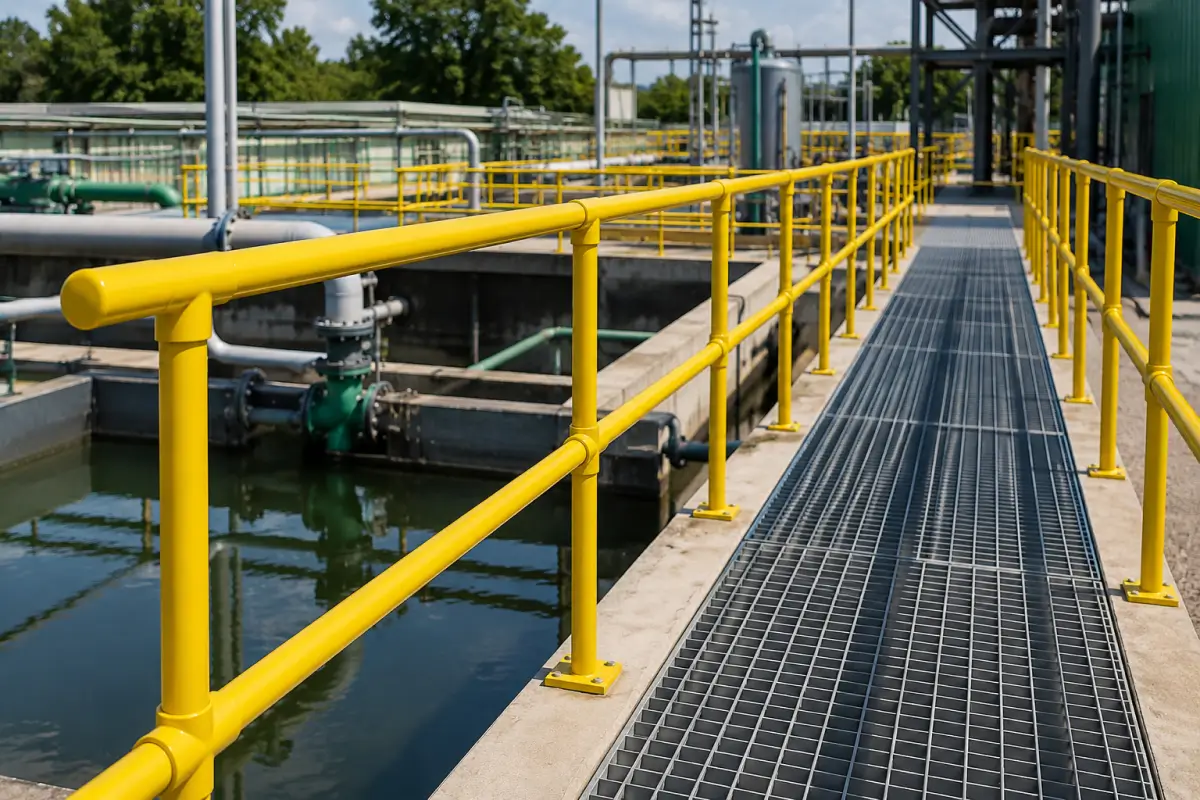
Industrial facilities require safety systems that can withstand demanding environmental conditions. Handrail systems are often exposed to moisture, chemicals, UV exposure, and heavy operational use.
Traditional metal handrails may deteriorate over time in corrosive environments. FRP systems are increasingly used because they provide corrosion resistance and long-term durability.
Many facilities install frp handrails in areas where safety, reliability, and low maintenance are important.
What are FRP Handrails?
FRP stands for Fibre Reinforced Plastic. These systems combine reinforced fibres with polymer resin materials to create lightweight structural products.
FRP handrails are commonly used in:
- Industrial walkways
- Platforms
- Access systems
- Wastewater facilities
- Coastal infrastructure
- Chemical processing plants
Their corrosion resistance makes them suitable for harsh operating environments.
Why Corrosion Resistance Matters
Corrosion is one of the main reasons facilities replace traditional steel safety systems.
Industrial environments may expose handrails to:
- Moisture
- Salt exposure
- Chemicals
- Cleaning agents
- Humidity
- Industrial pollutants
Over time, these conditions may weaken unprotected metal surfaces. FRP materials resist corrosion more effectively in many high-moisture and chemical environments.
Many companies reviewing benefits of frp handrails focus heavily on corrosion performance and reduced maintenance needs.
Lightweight Materials Simplify Installation
FRP handrails are generally lighter than many steel alternatives.
Lightweight systems may help reduce:
- Installation complexity
- Structural loading
- Transport requirements
- Handling challenges
This can improve installation efficiency, especially in elevated or restricted-access areas. Lightweight components may also simplify future modifications or expansions.
FRP Systems Require Less Maintenance
Corrosion-resistant materials often reduce long-term maintenance requirements.
FRP handrail systems may require less frequent:
- Surface treatment
- Rust removal
- Repainting
- Corrosion repair work
This can improve long-term operational efficiency for industrial facilities. Routine inspections still remain important for monitoring structural condition and connection points.
Electrical Non-Conductivity Improves Safety
FRP materials are naturally non-conductive. This characteristic can provide additional safety advantages in environments involving electrical equipment or power infrastructure.
Facilities sometimes use FRP systems around:
- Electrical substations
- Utility infrastructure
- Industrial processing equipment
- Power generation facilities
Material selection often depends on the operational risks present at each site.
Slip Resistance Supports Safer Access Areas
Industrial access systems must help reduce slip and fall risks. Many FRP handrail and access systems are used alongside slip-resistant flooring materials.
This may improve safety in areas exposed to:
- Water
- Oils
- Chemicals
- Outdoor weather conditions
Safe access systems remain important across both industrial and commercial environments.
Outdoor Durability in Harsh Conditions
Outdoor infrastructure systems face constant environmental exposure.
FRP materials generally perform well against:
- UV exposure
- Rain
- Salt air
- Temperature fluctuations
- Moisture exposure
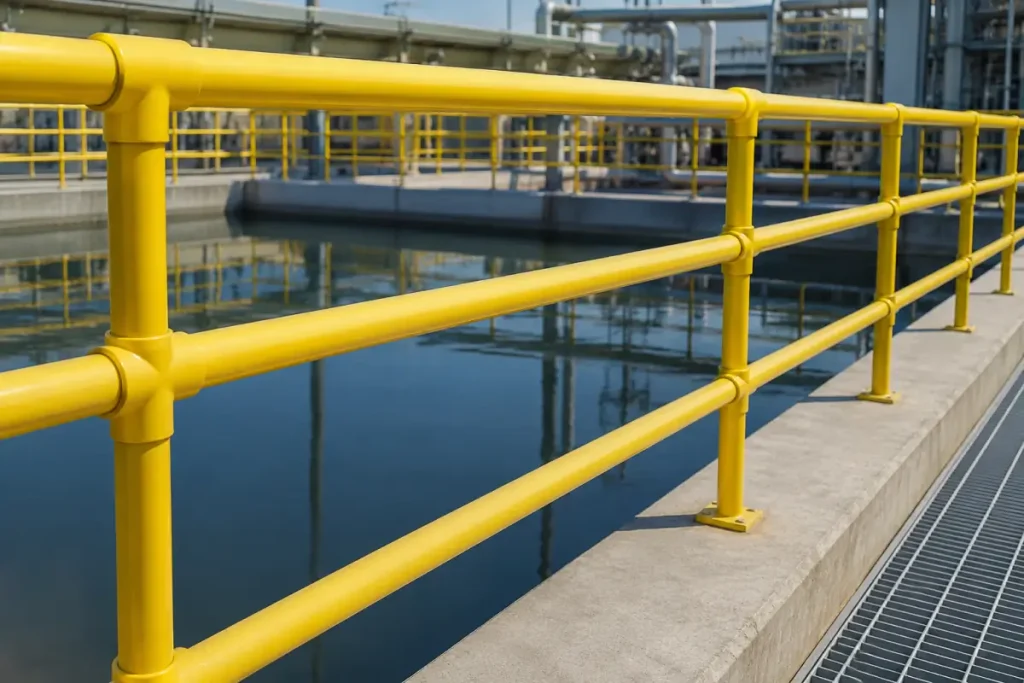
This durability makes FRP handrails suitable for outdoor industrial installations. Environmental performance may vary depending on resin type and operating conditions.
Common Industries Using FRP Handrails
Many industries use FRP systems where corrosion resistance and safety are priorities.
Common applications include:
- Wastewater treatment plants
- Marine facilities
- Chemical processing plants
- Food production facilities
- Mining operations
- Industrial manufacturing sites
These industries often require durable access systems with lower maintenance demands. Facilities exploring broader fibre reinforced plastic products may also use FRP grating, platforms, ladders, and structural components.
FRP Systems Support Long-Term Asset Performance
Long-term infrastructure planning often focuses on reducing maintenance costs and improving durability.
FRP handrails may support:
- Longer service life
- Reduced corrosion issues
- Improved safety performance
- Lower maintenance frequency
Environmental conditions still influence overall system lifespan and inspection requirements. Routine inspections help ensure long-term structural reliability.
Comparing FRP and Traditional Metal Handrails
Different handrail materials offer different advantages depending on the environment. Steel systems may provide high structural strength but often require ongoing corrosion management.
FRP systems are commonly selected for environments where:
- Corrosion resistance is important
- Lightweight installation is preferred
- Electrical conductivity creates risks
- Moisture exposure is constant
Material selection usually depends on site-specific operational conditions.
Final Thoughts
The benefits of FRP handrails include corrosion resistance, lightweight construction, and long-term durability, which is why they remain widely used across industrial environments.
Their performance in harsh operating conditions makes them suitable for facilities exposed to moisture, chemicals, and outdoor weather conditions.
As industrial infrastructure continues evolving, FRP systems remain an important option for safer and more reliable access solutions.