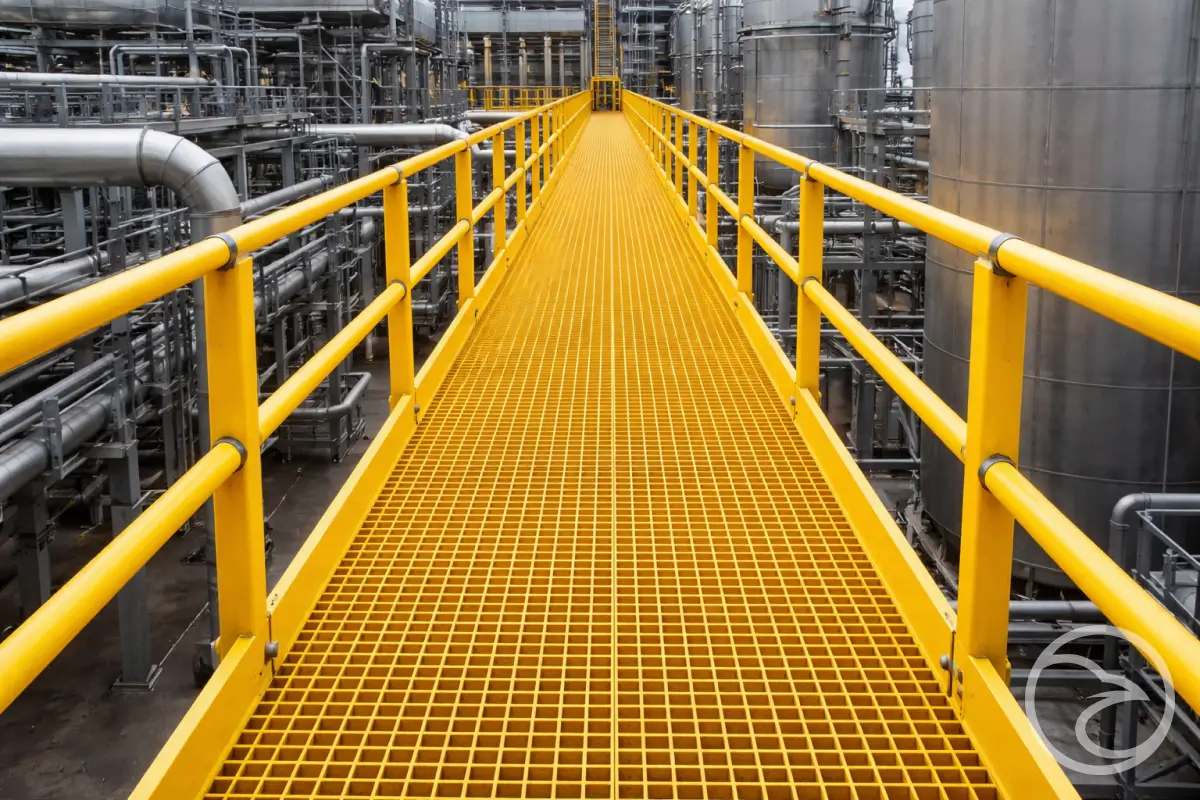
Industrial walkways provide safe access to equipment, elevated platforms, rooftops, and maintenance areas. Choosing the right material affects safety, maintenance costs, and long-term performance. Today, FRP walkways and steel walkways are the two most common options for industrial access systems. Both offer unique advantages, but each performs differently depending on the operating environment.
This guide compares fiberglass and steel walkways across the factors that matter most, including strength, corrosion resistance, maintenance, cost, lifespan, and application suitability.
What are FRP Walkways?
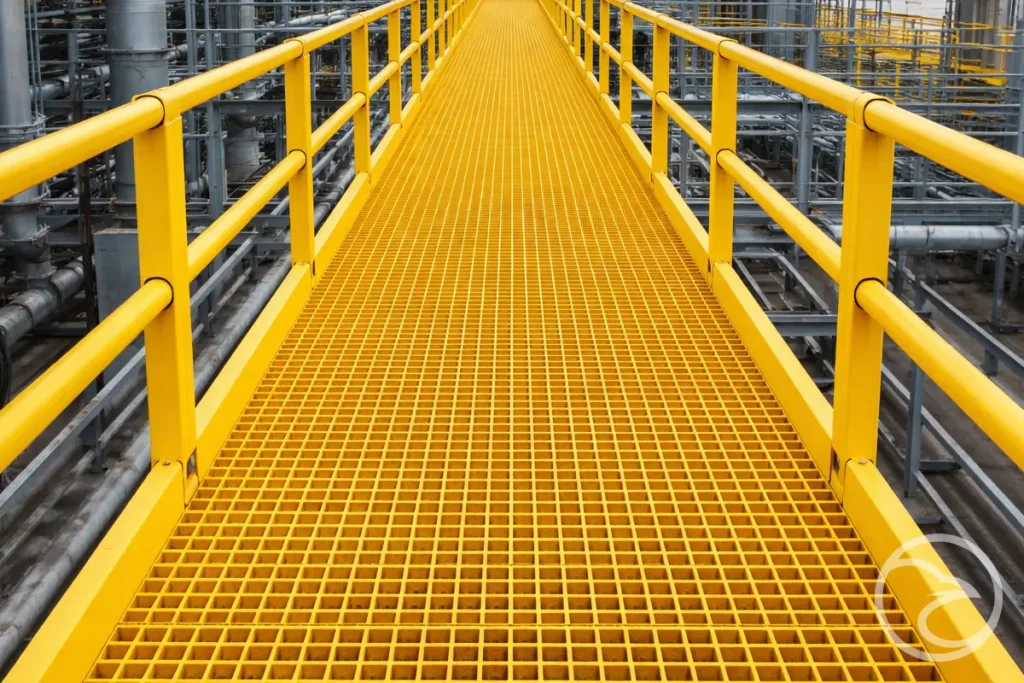
FRP walkways are access systems manufactured from fiberglass reinforced plastic. They combine fiberglass reinforcements with durable resin systems to create lightweight yet strong structures.
A typical system includes:
- FRP walkway grating
- Structural fiberglass profiles
- Handrail systems
- Support members
- Connection hardware
Unlike steel, fiberglass does not rust and requires very little maintenance. These properties make fiberglass walkways popular in chemical plants, water treatment facilities, marine environments, and many other corrosive applications.
Explore our FRP walkways solutions to see how custom-engineered fiberglass access systems are designed for industrial and commercial facilities.
What are Steel Walkways?
Steel walkways have been used for decades across industrial and commercial facilities. They are commonly manufactured from carbon steel, galvanized steel, or stainless steel.
Steel systems generally include:
- Steel grating
- Structural beams
- Steel handrails
- Welded or bolted connections
Steel remains one of the strongest construction materials available. It performs well under extremely high structural loads and long unsupported spans. However, it usually requires ongoing corrosion protection and routine maintenance.
FRP Walkways vs Steel Walkways: Quick Comparison
| Feature | FRP Walkways | Steel Walkways |
|---|---|---|
| Weight | Lightweight | Heavy |
| Corrosion Resistance | Excellent | Moderate to Poor |
| Maintenance | Low | Moderate to High |
| Slip Resistance | Excellent | Depends on surface |
| Chemical Resistance | Excellent | Limited |
| Electrical Conductivity | Non-conductive | Conductive |
| Installation | Faster | More labor-intensive |
| Initial Cost | Higher | Lower |
| Lifecycle Cost | Lower | Higher |
| Service Life | 25+ years | Depends on environment |
Although both materials perform well, the right choice depends on the project’s operating conditions rather than a single performance characteristic. New to fiberglass access systems? Read our FRP walkways explained guide to learn how they work, where they’re used, and their key advantages.
Weight and Installation
Weight influences transportation, handling, installation speed, and structural loading.
FRP Walkways
Because fiberglass is significantly lighter than steel, FRP walkways are easier to transport and install.
Benefits include:
- Easier handling
- Faster installation
- Reduced lifting equipment
- Lower transportation costs
- Less structural loading
Many retrofit projects benefit from lighter materials because existing buildings often have limited load capacity.
Steel Walkways
Steel offers excellent structural performance but increases installation complexity.
Common considerations include:
- Higher material weight
- Larger lifting equipment
- Longer installation times
- Increased labor requirements
Large industrial projects often require cranes and additional structural support during installation.
Corrosion Resistance
Corrosion is one of the biggest differences between fiberglass and steel.
FRP Walkways
Fiberglass naturally resists corrosion without protective coatings.
It performs well in:
- Saltwater environments
- Wastewater treatment plants
- Chemical processing facilities
- Food processing plants
- Coastal infrastructure
Because fiberglass does not rust, maintenance remains minimal throughout its service life.
Steel Walkways
Steel is vulnerable to corrosion when exposed to moisture or chemicals.
Protection usually requires:
- Galvanizing
- Protective coatings
- Regular repainting
- Routine inspections
- Rust repair
Even stainless steel may experience corrosion under certain aggressive conditions.
Winner: FRP
Structural Strength and Load Capacity
Steel generally provides higher absolute strength than fiberglass. However, strength alone does not determine which material performs better.
Steel Walkways
Steel remains the preferred choice for:
- Very heavy industrial loads
- Long unsupported spans
- High-impact environments
- Heavy equipment traffic
Its high stiffness allows engineers to design structures with fewer supports.
FRP Walkways
Modern FRP walkways offer an excellent strength-to-weight ratio.
Properly engineered systems easily support:
- Pedestrian traffic
- Maintenance personnel
- Inspection equipment
- Routine industrial operations
Load capacity depends on grating type, support spacing, and structural design. For most pedestrian applications, fiberglass provides more than enough structural performance.
Winner: Steel for maximum loads, FRP for most pedestrian applications.
Slip Resistance and Worker Safety
Worker safety remains one of the primary reasons facilities replace steel with fiberglass.
FRP Walkways
Most FRP walkway grating includes molded anti-slip surfaces.
Advantages include:
- Excellent wet traction
- Better drainage
- Reduced standing water
- Improved worker confidence
- Consistent grip
Open grating also prevents dirt and liquids from accumulating.
Steel Walkways
Steel grating may also provide good traction.
However, performance depends on:
- Surface condition
- Coating wear
- Rust formation
- Ice accumulation
Without proper maintenance, steel surfaces can become slippery.
Winner: FRP
Chemical Resistance
Industrial facilities often expose walkways to aggressive chemicals.
Fiberglass performs exceptionally well because different resin systems resist different chemical environments.
FRP walkways commonly perform well in:
- Acid exposure
- Alkalis
- Cleaning chemicals
- Wastewater
- Fertilizers
- Saltwater
Steel generally requires protective coatings to achieve similar performance. If coatings become damaged, corrosion may begin quickly.
Winner: FRP
Maintenance Requirements
Maintenance significantly affects the total cost of ownership.
FRP Walkways
Routine maintenance typically includes:
- Visual inspections
- Cleaning debris
- Checking fasteners
- Replacing damaged panels if necessary
Painting and corrosion repairs are usually unnecessary.
Steel Walkways
Steel maintenance often includes:
- Rust removal
- Surface preparation
- Repainting
- Coating repairs
- Corrosion inspections
- Structural repairs
Maintenance costs increase significantly in corrosive environments.
Winner: FRP
Service Life and Durability
Both FRP walkways and steel walkways can provide decades of reliable service. However, their lifespan depends heavily on the operating environment and maintenance practices.
FRP Walkways
Fiberglass is designed to resist moisture, chemicals, and UV exposure without losing its structural integrity. With proper engineering and routine inspections, fiberglass walkways commonly remain in service for more than 25 years.
Their durability comes from several advantages:
- No rust or corrosion.
- High resistance to chemicals.
- Excellent weather performance.
- Minimal surface degradation.
- Low maintenance requirements.
Because fiberglass does not require repainting or corrosion repair, it often maintains consistent performance throughout its service life.
Steel Walkways
Steel can also last for decades, especially in dry environments.
However, service life depends on several factors:
- Environmental exposure.
- Protective coatings.
- Galvanizing quality.
- Maintenance frequency.
- Corrosion control.
Facilities located near saltwater or exposed to aggressive chemicals often experience faster deterioration unless maintenance is performed regularly.
Winner: FRP in corrosive environments, Steel in controlled environments.
Cost Comparison
Initial purchase price tells only part of the story. The total lifecycle cost often provides a more accurate comparison.
Initial Cost
Steel walkways usually have a lower upfront material cost.
FRP walkway systems often require a larger initial investment because of specialized manufacturing and engineering.
Installation Cost
Fiberglass is lighter and easier to install.
This can reduce:
- Labor hours.
- Equipment requirements.
- Transportation costs.
- Installation time.
Steel installations often require heavier lifting equipment and larger installation crews.
Maintenance Cost
Maintenance creates one of the largest differences between the two materials.
FRP Walkways
Typical maintenance includes:
- Cleaning.
- Routine inspections.
- Occasional component replacement.
Steel Walkways
Maintenance often includes:
- Rust removal.
- Repainting.
- Surface preparation.
- Coating repairs.
- Corrosion treatment.
Over many years, maintenance expenses can exceed the initial savings offered by steel.
Lifecycle Cost
When installation, maintenance, repairs, and replacement are considered together, FRP walkways often provide the lower total cost of ownership.
Winner: Steel for initial cost, FRP for lifecycle value.
Best Applications for FRP Walkways
Certain industries benefit significantly from fiberglass access systems.
FRP walkways are often the preferred choice for:
Water and Wastewater Treatment
Constant moisture and chemicals make corrosion resistance essential.
Chemical Processing Plants
Fiberglass withstands aggressive chemicals that quickly damage steel.
Marine Facilities
Saltwater exposure makes corrosion one of the biggest maintenance challenges.
Food and Beverage Processing
Fiberglass provides durable, hygienic, and low-maintenance access systems.
Pharmaceutical Facilities
Cleaning chemicals and strict maintenance requirements favor corrosion-resistant materials.
Power and Utility Sites
The non-conductive properties of fiberglass improve safety around electrical equipment.
Commercial Rooftops
Lightweight fiberglass walkways reduce structural loading while protecting roofing systems.
When Steel Walkways may be the Better Choice
Although fiberglass offers many advantages, steel remains the better option for certain projects.
Steel may be preferred when a project requires:
- Extremely heavy structural loads.
- Very long unsupported spans.
- Continuous exposure to high temperatures.
- Heavy vehicle traffic.
- Severe impact loading.
Large industrial structures sometimes require the stiffness and load capacity that only steel can provide.
The best material depends on engineering requirements rather than material preference alone.
Which Material Should You Choose?
The right walkway material depends on your operating environment, maintenance expectations, and long-term project goals.
Choose FRP walkways if you need:
- Corrosion resistance.
- Low maintenance.
- Lightweight construction.
- Chemical resistance.
- Slip-resistant surfaces.
- Lower lifecycle costs.
Choose steel walkways if you need:
- Maximum structural strength.
- Long unsupported spans.
- Heavy industrial loading.
- High-temperature performance.
- Lower initial material costs.
Many facilities also combine both materials. Steel may support the primary structure, while fiberglass grating provides the walking surface.
Final Thoughts
Both FRP walkways and steel walkways offer reliable solutions for industrial access systems. The best choice depends on environmental conditions, structural requirements, maintenance expectations, and long-term operating costs.
For facilities exposed to moisture, chemicals, or saltwater, fiberglass walkways often provide the greatest long-term value. Steel continues to perform well where maximum structural strength and heavy loading are the primary design priorities.
Evaluating the entire lifecycle—not just the initial purchase price—helps determine which material will deliver the best performance for your specific application.