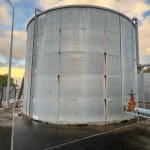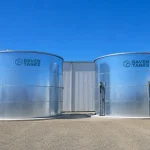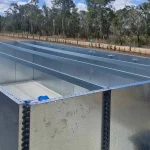
GRP water tanks are widely used for storing water in commercial, industrial, and building applications. GRP stands for glass reinforced plastic. It combines glass fibres with a polymer resin to create a strong composite material. The material does not rust like conventional steel. However, this does not mean GRP tanks are maintenance-free.
Problems can develop in panels, joints, seals, supports, fittings, and other components. Some problems develop gradually as components age. Others can result from installation issues, impact, movement, or environmental exposure. Not every visible change indicates serious structural damage.
Understanding common GRP water tank problems can help identify unusual conditions before they become more significant. This guide explains common defects, their causes, warning signs, and potential effects on tank performance.
What Causes Problems in GRP Water Tanks?
A GRP water tank is a complete storage system rather than a collection of GRP panels. Panels form an important part of the structure. However, joints, seals, fasteners, bracing, fittings, and supports also affect performance.
Problems can therefore originate from different parts of the system.
Common contributing factors include:
- Material ageing
- Incorrect installation
- Mechanical impact
- Excessive loading
- Seal deterioration
- Poor joint assembly
- Foundation movement
- Environmental exposure
- UV exposure
- Temperature changes
- Inadequate maintenance
- Damage to connected components
Water chemistry and operating conditions can also influence certain tank components. The cause of a problem may not always be visible from the outside. For example, water around a tank could indicate several different issues.
The source might be a panel joint, fitting, seal, or connected pipework. A detailed assessment may be required to determine the actual cause.
Professionally designed GRP water tanks provide durable and flexible water storage solutions for commercial and industrial applications.
1. Cracks in GRP Panels
Cracking is one of the more recognisable forms of GRP tank damage. Cracks can develop in different locations and may vary significantly in size.
Some remain limited to the surface. Others can extend deeper into the composite structure.
Possible causes include:
- Mechanical impact
- Excessive local stress
- Installation damage
- Structural movement
- Foundation movement
- Manufacturing defects
- Long-term material deterioration
Cracks should be considered in relation to their location and depth. A minor surface change does not automatically indicate significant structural damage.
However, deeper cracking can affect the integrity of a panel. Cracks can also create pathways for leakage. Possible warning signs include visible lines, surface separation, damp areas, or water around the tank.
Changes in crack size can also be important. A crack that progresses over time may indicate continuing movement or stress.
2. Leaking Panel Joints
Sectional GRP tanks are assembled from multiple panels. These panels must form watertight connections. Joints normally incorporate sealing components to prevent stored water from escaping.
Over time, these areas can develop leaks.
Possible causes include:
- Gasket deterioration
- Sealant deterioration
- Loose connections
- Incorrect assembly
- Panel movement
- Uneven loading
- Ageing components
Leakage may first appear as moisture along a panel connection. Small leaks can also create staining or consistently damp surfaces. Larger joint failures can result in more noticeable water loss.
The effects can extend beyond the tank. Escaping water may affect floors, plant rooms, nearby equipment, or surrounding building materials.
A leaking joint does not necessarily mean the GRP panel itself has failed. The sealing system or connection may instead require attention.
3. Deteriorated Seals and Gaskets
Seals and gaskets play an important role in sectional GRP water tanks. They help maintain watertight connections between individual components. These materials can change as they age.
They may harden, compress, crack, separate, or lose flexibility. Temperature and water conditions can also influence some sealing materials.
Common signs of deterioration include:
- Visible cracking
- Loss of flexibility
- Separation around joints
- Uneven compression
- Localised leakage
- Damaged sealant
Deteriorated seals can allow small leaks to develop. Water loss may initially be limited and difficult to notice. However, repeated leakage can affect nearby components and surrounding areas.
The condition of seals should therefore be considered separately from GRP panel condition. A tank can have structurally sound panels while experiencing problems with its sealing system.
4. Panel Bulging or Deformation
Water creates hydrostatic pressure against tank walls. The structural system must manage these loads during normal operation. Some movement may occur within the designed behaviour of a tank.
However, unusual deformation can indicate a condition requiring further assessment.
Possible contributing factors include:
- Excessive loading
- Bracing problems
- Support movement
- Incorrect assembly
- Foundation movement
- Connection problems
- Structural damage
Bulging may affect one panel or a larger area. The location and extent of deformation can provide useful information during an inspection. Changes over time are particularly important.
Progressive deformation can indicate continuing structural movement. Abnormal panel movement can also place additional stress on joints and connections. This may contribute to leakage or other secondary problems.
Visible deformation should not be diagnosed from appearance alone. The complete structural arrangement may need to be considered.
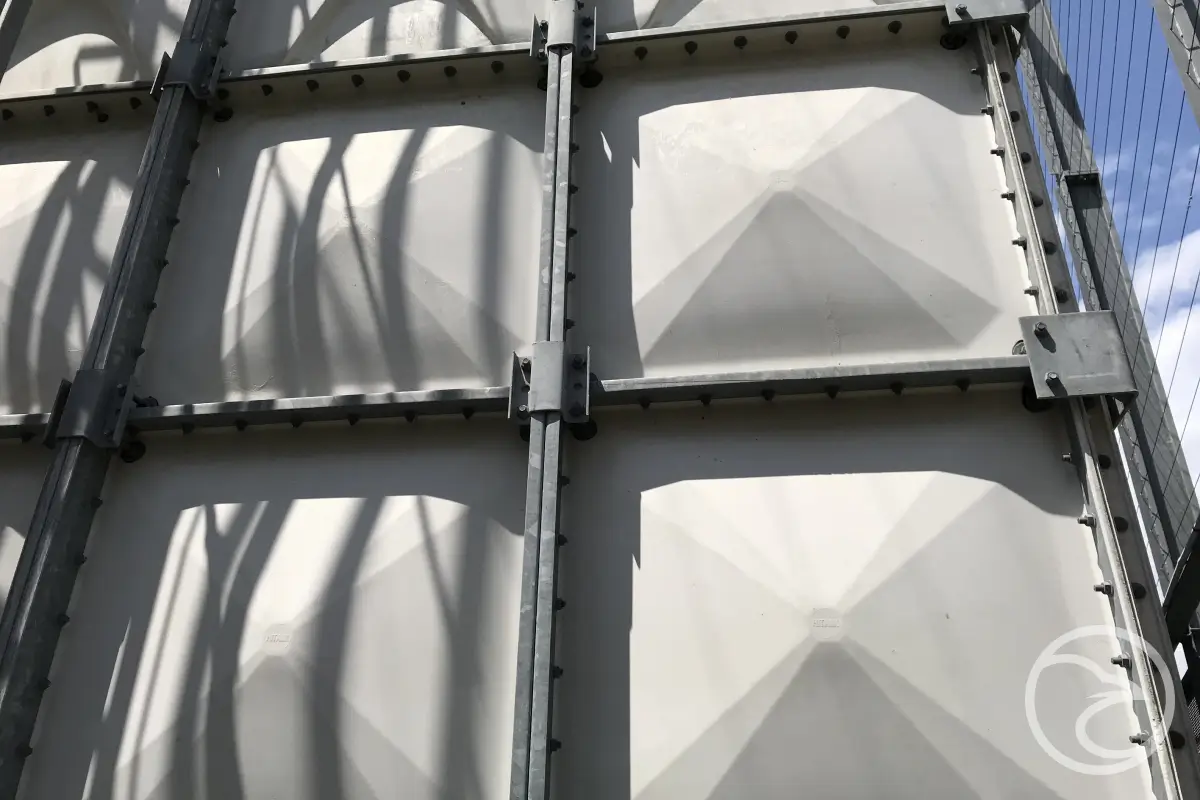
5. Internal Bracing Problems
Many sectional GRP tanks use internal or external structural supports. Bracing helps the tank manage water pressure and maintain its intended shape.
Problems with these components can influence the wider tank structure.
Possible issues include:
- Loose connections
- Damaged braces
- Displaced components
- Corroded metal parts
- Missing fasteners
- Mechanical damage
- Connection deterioration
A damaged brace can change how loads are distributed through the tank. This can increase stress in other components. Panels and joints may then experience movement that was not originally intended.
Bracing problems are not always visible during an external inspection. Internal assessment may be necessary to evaluate these components properly.
Their condition can be particularly important in larger sectional tanks.
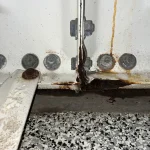
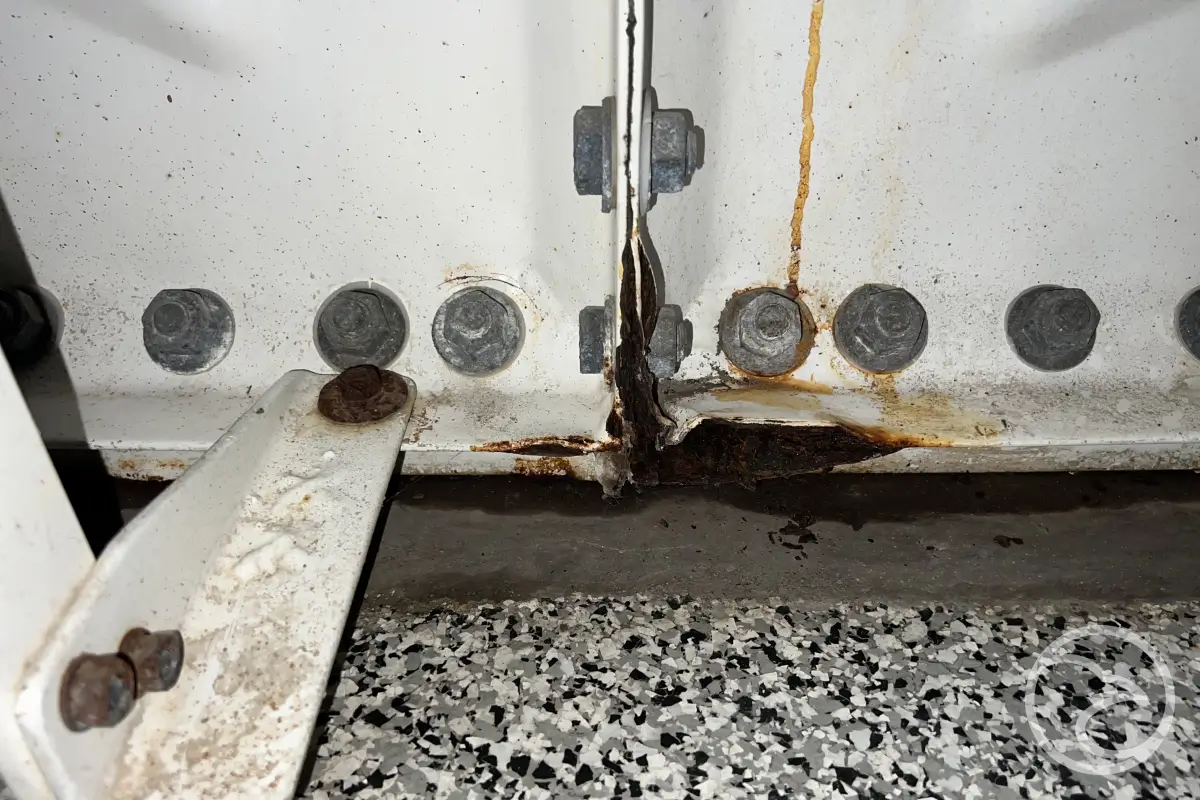
6. Corrosion of Metal Components
GRP itself does not undergo conventional rusting. However, a GRP water tank can contain numerous metallic components.
These may include:
- Bolts
- Fasteners
- Bracing
- Ladders
- Supports
- Fittings
- Pipe connections
Their corrosion behaviour depends on the material and operating environment. Water chemistry can affect some metallic components.
Humidity and condensation may also contribute to deterioration. External components can face additional environmental exposure.
Coastal environments may introduce higher levels of airborne salts. Corrosion can initially appear as surface discolouration or deposits. More advanced deterioration can affect the dimensions and strength of metallic parts.
This distinction is important when discussing corrosion in GRP tanks. The composite panels may remain unaffected while connected metallic components deteriorate.
7. Surface Deterioration and UV Exposure
Outdoor GRP tanks can experience prolonged environmental exposure. Sunlight is one factor that may affect exposed surfaces over time. Ultraviolet radiation can contribute to changes in some polymer-based materials.
The actual response depends on the resin, protective finish, and material specification.
Outdoor tanks can also experience:
- Rain
- Temperature changes
- Humidity
- Wind
- Airborne contaminants
- Mechanical weathering
Visible surface changes may include discolouration or changes in finish. These signs do not automatically indicate structural failure.
Surface condition and structural condition are not always the same. However, unusual or progressive changes can justify closer assessment.
Protective systems and appropriate material specifications can help manage environmental exposure.
8. Delamination and Composite Damage
GRP consists of reinforcement combined with a polymer matrix. Damage can sometimes affect the bond within this composite structure. Delamination describes separation between layers or areas within a composite material.
It can have several possible causes.
These may include:
- Mechanical impact
- Manufacturing defects
- Excessive stress
- Repeated loading
- Localised damage
- Long-term deterioration
Composite damage may not always look like a conventional crack. Affected areas can show surface changes, separation, or unusual deformation. The significance depends on the location, size, depth, and cause.
Some damage may remain localised. Other defects can affect how a panel responds to structural loads.
Specialist assessment may be required where internal composite damage is suspected.
9. Sediment Accumulation
Not every GRP tank problem is structural. Stored water can introduce sediment into the tank. Particles may settle when water remains relatively still.
The amount of sediment depends on the water source and operating conditions.
Accumulation can be influenced by:
- Water quality
- Water turnover
- Tank design
- Cleaning frequency
- Inlet arrangement
- Operating conditions
Sediment can collect on internal surfaces and around tank components. Large accumulations may make visual inspection more difficult. Deposits can hide sections of the tank floor.
They may also create conditions that support microbial growth. Sediment management can therefore form part of broader tank maintenance. This is particularly relevant where stored water quality is important.
10. Biofilm and Internal Contamination
Internal tank condition can influence stored water quality. Microorganisms can attach to wet surfaces and form biofilms under suitable conditions. Biofilm is not a problem unique to GRP tanks.
It can develop in many water storage and distribution systems.
Factors that can contribute include:
- Low water turnover
- Sediment accumulation
- Suitable temperatures
- Poor cleaning
- Contamination entering the tank
- Damaged access components
External contamination can also enter through poorly protected openings. This makes hatches, vents, overflows, and screens important parts of the storage system.
Changes in water appearance or odour can indicate a water quality issue. However, these changes do not identify the cause by themselves.
Water quality concerns may require separate investigation and testing.
11. Problems with Vents, Screens and Access Hatches
Smaller tank components can have an important role in protecting stored water. Access hatches allow inspection, cleaning, and maintenance. Vents allow pressure equalisation as water levels change.
Screens can help prevent insects and debris from entering certain openings.
Problems can include:
- Damaged screens
- Missing screens
- Poorly fitted covers
- Damaged hatches
- Blocked vents
- Broken seals
- Loose components
These issues may not affect the GRP structure directly. However, they can create pathways for contamination. A damaged hatch can allow water, dust, insects, or other materials to enter.
Blocked or damaged ventilation components can create other operational concerns. These components should therefore be included during tank condition assessments.
12. Problems Around Inlets, Outlets and Overflows
Pipe connections create transition points between the tank and the wider water system. These areas can experience movement, loading, and sealing problems.
Possible issues include:
- Leakage
- Damaged seals
- Loose connections
- Pipe movement
- Mechanical stress
- Deteriorated fittings
Unsupported pipework can potentially transfer additional loads to tank connections. Movement can also affect seals around penetrations.
Overflows require particular attention because they form part of water level management. Damaged screens or fittings can create contamination pathways.
Visible moisture around a connection should therefore be investigated rather than assumed to be panel leakage. The actual source may be the pipework, fitting, seal, or surrounding connection.
13. Foundation and Support Problems
Some apparent tank problems originate outside the tank itself. The foundation provides support for the entire structure. Uneven or inadequate support can affect load distribution.
Possible foundation issues include:
- Settlement
- Uneven surfaces
- Local movement
- Structural deterioration
- Changes to surrounding supports
Movement underneath a sectional tank can affect panel alignment. It may also influence joints and structural bracing.
Potential consequences include:
- Uneven loading
- Panel stress
- Joint movement
- Leakage
- Deformation
- Connection problems
Foundation problems can therefore create symptoms in several areas of the tank. Repairing an individual joint may not address the underlying cause if movement continues.
The supporting structure should be considered when investigating recurring tank problems.
14. Loose or Damaged Fasteners
Bolts and other fasteners connect important parts of sectional GRP tanks. Their condition can influence both structural stability and watertightness. Fasteners can experience changes from loading, vibration, corrosion, or maintenance activities.
Potential issues include:
- Loose bolts
- Missing fasteners
- Corrosion
- Damaged threads
- Incorrect tightening
- Uneven connections
A loose connection can allow movement between components. This movement may place additional stress on seals or surrounding panels. Fastener condition should therefore be assessed as part of the wider connection system.
Simply tightening a visible bolt may not address the reason it became loose.
How GRP Tank Problems can Affect Performance
Different defects can have different consequences. A small surface issue may have little immediate effect.
A structural or sealing problem can have more significant consequences.
Water Loss
Leaks can reduce stored water levels. The rate of water loss depends on the location and severity of the defect.
Even relatively small leaks can become important when they continue for long periods.
Structural Performance
Panels, supports, bracing, and connections work together as one structural system. Damage to one area can alter how loads are distributed.
This does not mean every defect threatens structural integrity. The significance depends on the specific condition.
Water Quality
Damaged hatches, screens, vents, or seals can create potential contamination pathways. Internal sediment and biofilm can also affect stored water conditions.
Potable water systems can require particular attention to hygiene and water quality requirements.
Surrounding Areas
Water escaping from a tank does not remain an isolated tank issue.
Leaks can affect:
- Floors
- Walls
- Plant rooms
- Electrical equipment
- Stored materials
- Nearby machinery
Early identification can therefore be important even when the tank continues to hold most of its water.
Maintenance Requirements
Minor defects can change over time. Monitoring can help determine whether a condition remains stable or continues to develop.
Inspection records and photographs can also support future comparisons.
Warning Signs of GRP Water Tank Problems
Some problems can produce visible warning signs. Others remain hidden until an internal inspection takes place.
Possible warning signs include:
- Water around the tank
- Damp panel joints
- Visible cracks
- Unusual panel deformation
- Damaged seals
- Corroded metal components
- Loose fittings
- Surface deterioration
- Sediment accumulation
- Damaged hatches
- Missing vent screens
- Changes around pipe connections
- Movement around the foundation
- Changes in stored water condition
A single warning sign does not necessarily reveal the cause. For example, external moisture could originate from the tank or connected pipework.
Visible signs also do not automatically establish defect severity. Further assessment can help identify the affected component and possible cause.
Are all GRP Tank Defects Serious?
Not every defect has the same significance. Some changes can be primarily cosmetic. Others may indicate a maintenance requirement rather than a structural problem.
More significant conditions can involve leakage, structural components, or progressive material damage.
Defect severity can depend on:
- Location
- Size
- Depth
- Cause
- Rate of progression
- Tank design
- Operating conditions
- Previous damage
The interaction between different defects also matters. For example, foundation movement can contribute to panel deformation and joint leakage.
Repairing only the visible leak may not resolve the underlying movement. Condition should therefore be assessed within the context of the complete tank system.
Can GRP Water Tank Problems be Prevented?
It is not realistic to assume every future defect can be prevented. Components age, operating conditions change, and unexpected damage can occur. However, good management can reduce avoidable deterioration.
Useful measures can include:
- Correct tank installation
- Appropriate material specification
- Suitable foundation design
- Routine condition checks
- Scheduled inspections
- Appropriate cleaning
- Monitoring panel joints
- Maintaining seals and gaskets
- Protecting tanks from impact
- Checking structural supports
- Maintaining access components
- Investigating leaks promptly
Maintenance should address the entire tank rather than GRP panels alone. Connections, fittings, seals, supports, and access components also require attention.
Explore how water tank inspection without draining helps identify visible corrosion, sediment buildup, and coating deterioration.
Why Regular GRP Tank Inspection Matters
Some defects are easy to identify externally. Others can develop inside the tank or around less accessible components. Regular inspection helps establish the condition of panels, joints, supports, seals, and fittings.
It can also provide a record of changes over time. Our GRP water tank inspection guide explains common inspection methods and the main areas checked during a tank assessment. Inspection findings can help distinguish between cosmetic changes and conditions requiring further investigation.
They can also identify recurring problems. For example, repeated joint leakage may indicate movement elsewhere in the structure.
Inspection should therefore consider both the visible defect and its possible cause.
Summary
GRP water tanks avoid the conventional rusting associated with carbon steel. However, GRP tanks can still develop problems during their service life. Common issues include panel cracks, joint leaks, deteriorated seals, deformation, and bracing problems.
Metal components within GRP tanks can also experience corrosion. Other concerns can involve sediment, biofilm, damaged access components, pipe connections, and foundations. These problems do not all have the same cause or severity.
Some are limited maintenance issues, while others may require more detailed assessment. The effect of a defect depends on its location, extent, cause, and progression.
Regular inspection can help identify changes and provide information about overall tank condition. Considering the complete system is essential when investigating GRP water tank problems.