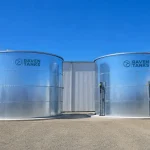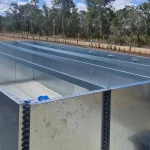
Bolted vs welded galvanised tanks is a common consideration for water storage projects. Galvanised steel tanks are widely used across commercial, industrial, agricultural, and fire protection applications due to their durability, corrosion resistance, and long service life.
The two most common designs are bolted tanks and welded tanks. Each offers different advantages in terms of installation, maintenance, flexibility, and long-term performance.
Understanding these differences helps asset owners choose the most suitable solution for their specific requirements.
Understanding Galvanised Steel Tanks
Galvanised steel tanks are manufactured from steel coated with a layer of zinc. This protective coating shields the steel from corrosion and environmental exposure.
The most common galvanising process is hot-dip galvanising. During this process, steel components are immersed in molten zinc. The zinc forms a durable protective layer that can withstand harsh outdoor conditions.
Galvanised tanks are commonly used for:
- Fire water storage
- Potable water storage
- Agricultural water systems
- Irrigation projects
- Industrial process water
- Rainwater harvesting
The key difference between tank designs lies in how the tank structure is assembled.
What are Bolted Galvanised Steel Tanks?
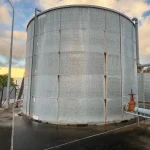
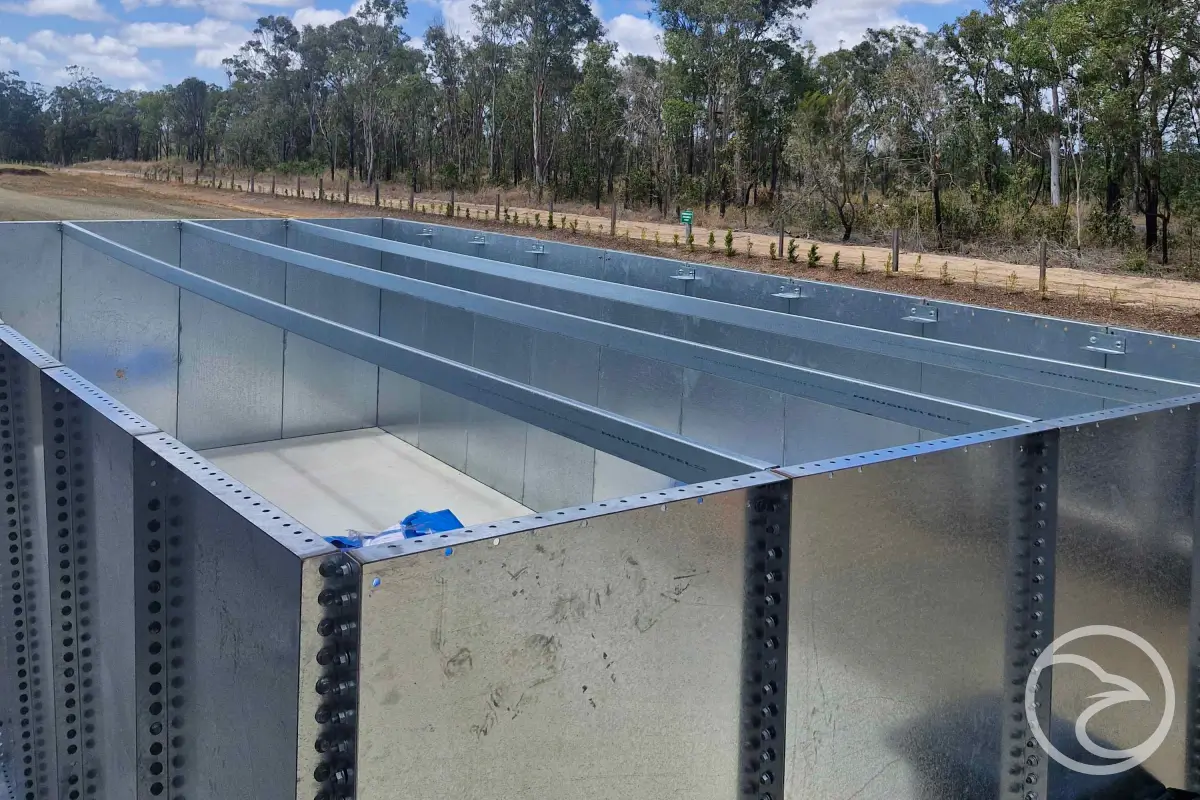
Bolted galvanised steel tanks are assembled using prefabricated steel panels connected with bolts and sealing materials. The panels are manufactured off-site and delivered to the project location ready for assembly.
Many modern hdg panel tanks use modular panel systems that allow flexible tank sizes and configurations. The modular design enables tanks to be installed in locations where large prefabricated structures cannot easily be transported.
Key Characteristics of Bolted Tanks
Bolted tanks typically feature:
- Factory-manufactured panels
- Modular construction
- On-site assembly
- Replaceable components
- Expandable designs
- Reduced transport challenges
The structure can often be dismantled and relocated if operational requirements change.
What are Welded Galvanised Steel Tanks?
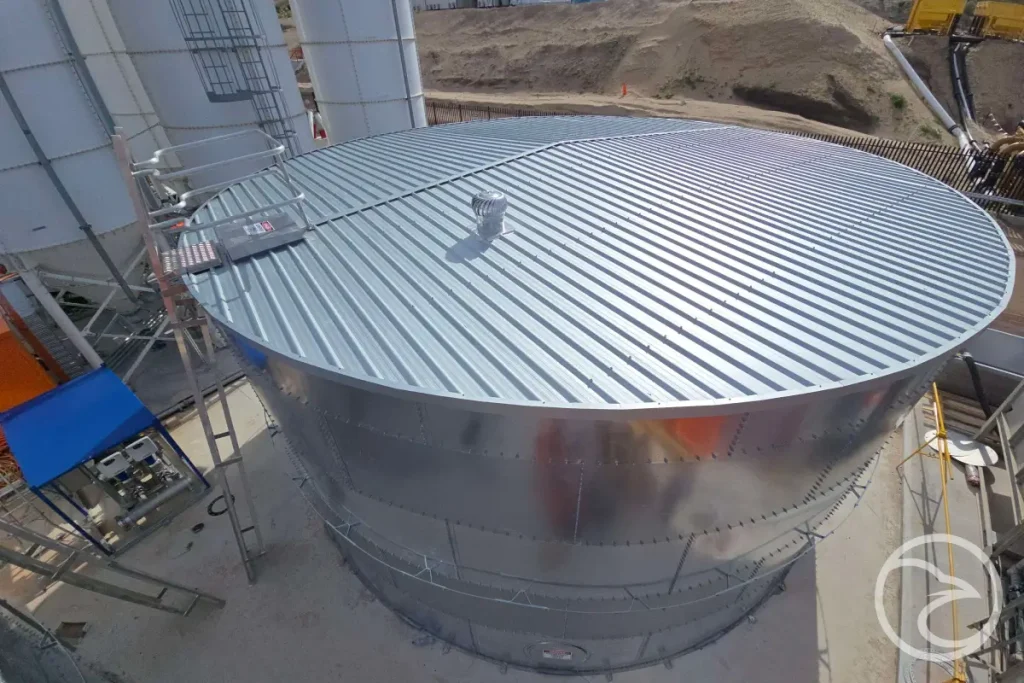
Welded galvanised steel tanks are constructed by joining steel plates through welding. The tank may be partially fabricated in a workshop or fully assembled on-site. Once the welding process is completed, galvanising or protective coatings are applied to protect the steel.
Welded tanks are generally built as permanent structures and are not intended for relocation.
Key Characteristics of Welded Tanks
Welded tanks commonly include:
- Continuous welded seams
- Rigid construction
- Permanent installation
- Custom fabrication options
- High structural strength
These tanks are often selected for projects where long-term fixed storage is required.
Installation Differences
Installation requirements vary significantly between bolted and welded designs.
Bolted Tank Installation
Bolted tanks are assembled from individual panels. Components are transported separately and connected on-site.
This process offers several advantages:
- Faster installation schedules
- Lower site disruption
- Reduced heavy lifting requirements
- Easier access to restricted locations
Installation crews can often complete assembly without extensive welding equipment.
Welded Tank Installation
Welded tanks require skilled welders and specialised equipment.
The installation process may involve:
- Plate positioning
- Welding operations
- Weld inspections
- Surface preparation
- Protective coating application
Construction timelines are often longer than comparable bolted systems.
Transportation Considerations
Transportation can strongly influence tank selection. Bolted tanks are delivered as individual panels and components. This allows efficient shipping and easier handling.
Remote sites often benefit from modular delivery methods. Welded tanks may require transportation of larger sections or full tank assemblies. This can create logistical challenges for oversized loads.
Projects in difficult-to-access locations frequently favour bolted designs.
Structural Performance
Both tank types can provide excellent structural performance when designed correctly. The best option depends on the specific project requirements.
Bolted Tank Performance
Modern bolted tanks are engineered to withstand:
- Water pressure loads
- Wind loads
- Seismic activity
- Temperature fluctuations
Advanced engineering standards allow bolted systems to perform effectively in demanding environments.
Welded Tank Performance
Welded tanks offer continuous steel construction with no mechanical joints between plates.
This can provide:
- High structural rigidity
- Strong resistance to deformation
- Long-term stability
- Suitability for large storage volumes
Engineering design remains critical regardless of the construction method.
Maintenance Requirements
Maintenance planning is important for every water storage asset.
Bolted Tanks
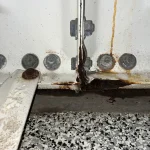
Bolted tanks offer accessible components that can be inspected individually.
Maintenance activities may include:
- Seal inspections
- Bolt checks
- Panel assessments
- Corrosion monitoring
If damage occurs, individual panels can often be replaced without replacing the entire structure.
Welded Tanks
Welded tanks generally require inspection of:
- Weld integrity
- Protective coatings
- Corrosion levels
- Structural condition
Repairs may involve welding activities and specialised contractors.
The repair process can be more complex if damage affects structural sections.
Flexibility and Future Expansion
Project requirements often change over time. Storage capacity may need to increase as operations grow.
Bolted Tanks
One of the major advantages of bolted systems is flexibility. Additional panels can often be incorporated to increase capacity.
Owners may also relocate or reconfigure the tank when site requirements change. This adaptability is particularly valuable for expanding facilities.
Welded Tanks
Welded tanks are typically designed for fixed dimensions. Increasing capacity may require major structural modifications or complete tank replacement.
Future expansion should therefore be considered during the initial design stage.
Corrosion Protection
Corrosion resistance is a major reason for selecting galvanised steel tanks. Both tank types benefit from zinc protection.
However, corrosion performance depends on several factors:
- Water quality
- Environmental exposure
- Coating quality
- Maintenance practices
- Installation quality
Regular inspections help identify issues before significant deterioration occurs.
Cost Considerations
Initial cost is often an important decision factor. However, total lifecycle cost should also be evaluated.
Bolted Tank Costs
Bolted systems may offer savings through:
- Reduced transport costs
- Faster installation
- Lower site labour requirements
- Easier future modifications
The modular design can reduce overall project complexity.
Welded Tank Costs
Welded tanks may involve:
- Higher site labour requirements
- Longer construction periods
- More specialised installation activities
However, project-specific conditions can influence actual costs significantly. Cost comparisons should always be based on detailed project assessments.
Typical Applications
Different industries often favour different tank designs.
Common Applications for Bolted Tanks
Bolted tanks are frequently used for:
- Fire protection systems
- Agricultural water storage
- Municipal water storage
- Mining operations
- Remote infrastructure projects
Many organisations choose hdg tanks because of their flexibility and ease of installation.
Common Applications for Welded Tanks
Welded tanks are often selected for:
- Permanent industrial facilities
- Large-scale process water storage
- Heavy industrial environments
- Long-term fixed infrastructure
The choice depends on operational goals and site conditions.
Environmental Considerations
Sustainability is becoming increasingly important in infrastructure planning. Galvanised steel offers several environmental advantages.
Steel is highly recyclable and can be reused at the end of its service life. Bolted systems may further support sustainability goals because components can be reused or relocated.
Reducing waste and extending asset life can contribute to improved environmental outcomes.
Benefits of Modern Galvanised Panel Systems
Modern modular tank technology has evolved significantly in recent decades. Many operators now recognise the benefits of hot-dip galvanized panel tanks when evaluating water storage options.
Some of the most commonly cited benefits include:
- Long service life
- Strong corrosion resistance
- Modular construction
- Easier transportation
- Faster installation
- Flexible capacity options
- Simplified maintenance
These characteristics make panel-based systems suitable for a wide range of industries.
Choosing the Right Tank for Your Project
There is no universal answer when comparing bolted and welded galvanised steel tanks. The best solution depends on multiple factors.
Key considerations include:
- Project budget
- Site accessibility
- Required storage capacity
- Installation timeline
- Future expansion plans
- Maintenance strategy
- Environmental conditions
A thorough assessment of operational requirements should always guide the selection process.
Conclusion
Both options in the bolted vs welded galvanised steel tanks comparison offer reliable water storage solutions. Bolted tanks provide greater flexibility and easier expansion, while welded tanks are ideal for permanent installations.
By understanding the differences between these systems, organisations can choose a tank solution that best matches their operational and long-term requirements.