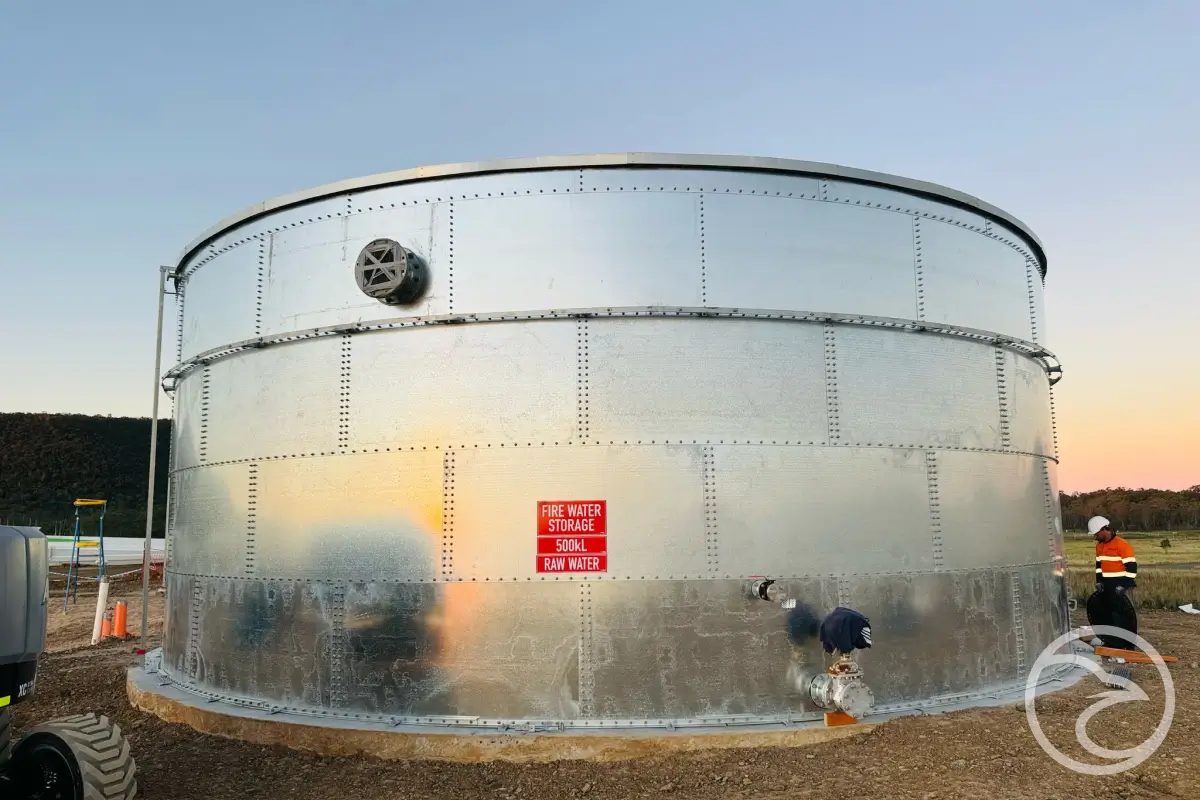
Water storage is a critical component of modern infrastructure. Reliable storage systems support municipal water networks, commercial developments, industrial facilities, mining operations, agricultural sites, and fire protection systems. As infrastructure projects continue to grow in size and complexity, the demand for flexible and scalable water storage solutions has also increased.
Modular water storage systems have become a preferred choice for many projects because they offer greater design flexibility than traditional one-piece tanks. Instead of transporting a complete tank to the site, modular systems are delivered as individual components and assembled where they will be used. This approach simplifies transportation, supports larger storage capacities, and allows installations in locations where access may be limited.
Another advantage of modular construction is adaptability. Many systems can be expanded, upgraded, or modified as water demand changes. This makes them suitable for infrastructure projects designed to serve growing communities or evolving industrial operations.
Modular tanks are available in a wide range of materials, including galvanised steel, stainless steel, glass reinforced plastic (GRP), and composite panels. Each material offers different advantages depending on the intended application, water quality requirements, environmental conditions, and maintenance expectations.
This guide explains the different types of modular water storage systems, compares common construction materials, outlines their applications, and highlights the key factors that influence cost, durability, and long-term performance.
What are Modular Water Storage Systems?
A modular water storage system is a tank built from multiple prefabricated components that are assembled on site. Unlike traditional welded or moulded tanks, modular systems consist of panels or structural sections manufactured under controlled factory conditions. These components are transported individually before being connected to create the required storage capacity.
The modular approach offers significant flexibility during both construction and future operation. Most modular systems can be designed in a wide variety of heights, widths, and capacities. If storage requirements increase later, many tanks can be expanded by adding additional panels rather than replacing the entire structure.
Common characteristics include:
- prefabricated components
- on-site assembly
- scalable capacity
- easier transportation
- simplified maintenance
- future expansion potential
These advantages make modular systems suitable for projects where space, logistics, or future growth are important considerations.
Why Modular Water Storage Systems are Popular in Infrastructure Projects
Infrastructure projects often involve unique construction challenges. Remote locations, limited site access, varying water demand, and strict project schedules all influence the selection of storage systems.
Modular tanks address many of these challenges more effectively than conventional tank designs.
Easier Transportation
Large one-piece tanks can be difficult and expensive to transport. Modular panels occupy less transport space and can often be delivered using standard freight methods.
This simplifies delivery to remote or confined construction sites.
Faster Installation
Factory-manufactured components arrive ready for assembly. Because much of the manufacturing process is completed before delivery, on-site construction time is often reduced compared with traditional concrete or welded storage systems.
This helps minimise project delays.
Flexible Design
Infrastructure projects rarely have identical requirements. Modular systems can be designed for different storage capacities, layouts, and installation conditions without requiring completely different manufacturing processes.
This flexibility supports a wide variety of applications.
Future Expansion
Water demand often changes throughout the life of an infrastructure project. Many modular storage systems can be expanded without replacing the original installation.
Additional panels or structural sections allow capacity to increase as operational requirements grow.
Simplified Maintenance
Individual components can often be repaired or replaced without dismantling the entire tank. This reduces downtime while helping extend the overall service life of the storage system.
Common Types of Modular Water Storage Systems
Several modular tank designs are available, each suited to different operating environments and project requirements. Understanding their differences helps engineers and asset owners select the most appropriate solution.
Sectional Panel-Based Storage Tanks
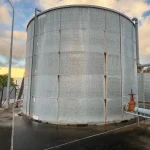
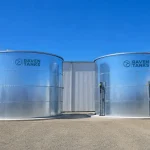
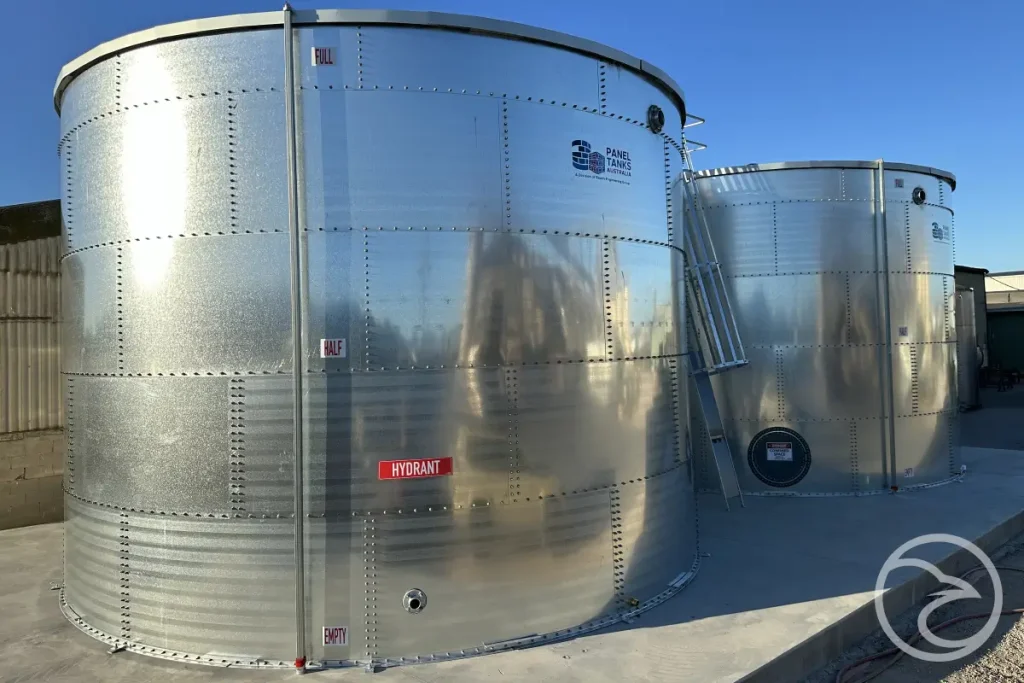
Sectional tanks are among the most widely used modular water storage systems. They consist of individual panels that are bolted together using seals and structural fixings. Once assembled, the panels form a complete watertight storage tank.
Because every panel is manufactured separately, sectional tanks can be constructed in many different sizes.
Typical advantages include:
- flexible dimensions
- easier transport
- expandable capacity
- straightforward maintenance
- replacement of individual panels if required
These systems are commonly used for commercial buildings, hospitals, schools, industrial facilities, and municipal water infrastructure.
Modular Steel Storage Tanks
Steel remains one of the most widely used materials for modular water storage. Steel modular tanks combine high structural strength with relatively simple construction methods. Depending on project requirements, manufacturers may use galvanised steel, coated steel, or stainless steel.
Galvanised steel provides good corrosion resistance for many water storage applications. Stainless steel offers even greater durability where water quality or aggressive environmental conditions require additional protection.
Modular steel tanks are often selected for:
- commercial developments
- industrial facilities
- municipal infrastructure
- fire protection systems
- mining operations
With appropriate maintenance and corrosion protection, steel systems can provide reliable long-term performance.
To better understand the differences between steel tank designs, read bolted vs welded galvanised steel tanks.
Composite Modular Storage Systems
Composite tanks combine multiple materials to improve durability while reducing maintenance requirements. The most common examples include GRP (Glass Reinforced Plastic) and FRP (Fibreglass Reinforced Plastic) panel systems.
Unlike steel, composite materials do not rust. They also offer excellent resistance to many environmental conditions, making them suitable for potable water storage and coastal environments.
Benefits include:
- corrosion resistance
- lightweight construction
- smooth internal surfaces
- reduced maintenance
- long service life
Composite modular tanks are increasingly used where water quality and long-term operating costs are important considerations.
Modular Concrete Storage Systems
Concrete remains an important option for large-scale water storage infrastructure. Although many concrete tanks are constructed in place, modular concrete systems use prefabricated sections that are assembled on site. This approach reduces construction time while maintaining the strength associated with reinforced concrete.
Modular concrete tanks are commonly selected for projects requiring very large storage capacities or permanent installations.
Their advantages include:
- high structural strength
- excellent durability
- long service life
- resistance to physical damage
- suitability for underground installations
However, concrete systems generally require more extensive foundations and specialised lifting equipment during installation. Future expansion is also more difficult than with panel-based modular tanks.
Hybrid Modular Storage Systems
Some infrastructure projects benefit from combining different materials within a single storage system. Hybrid modular tanks are designed to take advantage of the strengths of multiple materials while reducing their individual limitations.
Examples include:
- steel structures with internal liners
- galvanised steel frames with composite panels
- concrete foundations supporting modular steel tanks
- GRP panels combined with stainless steel components
Hybrid designs are often selected where corrosion resistance, structural strength, and long-term maintenance all influence the final specification. The exact configuration depends on the project’s environmental conditions and operational requirements.
Modular Water Tanks by Application
Different infrastructure projects place different demands on water storage systems. The best modular tank for one application may not be the ideal choice for another.
Potable Water Storage
Potable water tanks must protect drinking water quality throughout the storage process. For this reason, materials, coatings, and internal surfaces are selected to minimise contamination risks while supporting long-term hygiene.
Common options include:
- stainless steel
- GRP panels
- certified composite systems
Smooth internal surfaces also make routine inspections and cleaning easier.
Fire Water Storage
Fire water tanks must provide reliable water storage at all times, even if they remain unused for long periods. Durability, structural reliability, and ongoing maintenance are often more important than appearance.
Many fire protection systems use:
- galvanised steel tanks
- sectional panel tanks
- large modular steel reservoirs
Regular inspections and maintenance help ensure these systems remain ready for emergency use.
Commercial Buildings
Commercial buildings require dependable water storage for daily operations. Hotels, hospitals, schools, office buildings, shopping centres, and residential developments frequently use modular tanks because they are adaptable and relatively easy to install.
The storage system can often be customised to suit available plant room space or rooftop installations.
Industrial Facilities
Industrial operations often require large storage capacities and robust construction.
Manufacturing plants, processing facilities, and logistics centres may store water for:
- production processes
- cooling systems
- cleaning operations
- emergency reserves
Steel and composite modular systems are both widely used depending on water quality requirements and operating conditions.
Municipal Infrastructure
Municipal water networks require storage systems capable of serving large populations. Modular tanks allow water authorities to expand storage capacity without replacing existing infrastructure.
Their scalable design makes them suitable for growing communities where future demand remains uncertain.
Mining and Remote Sites
Mining operations frequently operate in isolated locations where transporting large one-piece tanks is impractical. Modular storage systems simplify logistics because components can be transported separately before assembly.
Their flexibility also allows tanks to be relocated or expanded if site requirements change.
Above-Ground vs Elevated Modular Water Tanks
Both above-ground and elevated modular tanks are widely used across infrastructure projects. The most suitable option depends on site conditions, available space, hydraulic requirements, and project objectives.
| Above-Ground Tanks | Elevated Tanks |
|---|---|
| Installed directly on a foundation | Supported above ground on a structural frame or tower |
| Lower construction costs | Higher installation costs |
| Easier inspections and maintenance | Provides gravity-fed water pressure |
| Suitable for large storage capacities | Often used where pumping needs to be reduced |
| Simpler future expansion | More complex structural design |
Above-ground systems remain the most common choice because they are easier to construct and maintain. Elevated tanks are typically selected where gravity pressure provides operational or energy-saving advantages.
Common Materials Used in Modular Water Storage Systems
Material selection has a major influence on durability, maintenance requirements, and overall lifecycle costs.
Each material offers different benefits depending on the application.
Galvanised Steel
Galvanised steel remains one of the most widely specified materials for modular water tanks. Its protective zinc coating improves corrosion resistance while maintaining excellent structural strength.
Common applications include:
- fire water storage
- commercial developments
- industrial facilities
- municipal infrastructure
Regular inspections help maintain coating performance throughout the tank’s service life.
Stainless Steel
Stainless steel provides exceptional corrosion resistance and excellent hygiene characteristics. It is frequently selected for potable water storage where water quality is a priority.
Advantages include:
- excellent durability
- corrosion resistance
- smooth internal surfaces
- low maintenance requirements
Although initial costs are generally higher, stainless steel often delivers lower long-term maintenance costs.
Glass Reinforced Plastic (GRP)
GRP has become increasingly popular for modular panel tanks. It combines high strength with excellent corrosion resistance while remaining significantly lighter than steel.
Additional benefits include:
- lightweight construction
- smooth internal finish
- UV resistance
- minimal corrosion risk
- long service life
GRP tanks are widely used for potable water storage and commercial facilities. For more information about composite tank construction, see our page on GRP water tanks.
Fibreglass Reinforced Plastic (FRP)
FRP shares many characteristics with GRP and performs well in demanding environments. It offers high strength, low maintenance, and excellent resistance to moisture and many chemicals.
These properties make FRP suitable for industrial and commercial applications where corrosion presents an ongoing concern.
Concrete
Concrete continues to be used for large infrastructure projects requiring maximum durability. Although installation is generally more complex, concrete tanks provide excellent structural stability and very long service life when properly maintained.
Polyethylene
Polyethylene is less common for very large infrastructure projects but remains popular for smaller modular storage systems.
Its advantages include:
- lightweight construction
- corrosion resistance
- simple installation
- relatively low maintenance
Polyethylene systems are often used where moderate storage capacities are sufficient and installation speed is important.
How Much Do Modular Water Storage Systems Cost?
The cost of a modular water storage system varies significantly from one project to another. Rather than focusing only on the purchase price, project owners should consider the total cost of ownership. Installation, maintenance, inspections, future expansion, and expected service life all contribute to the overall investment.
Several factors influence the final project cost.
Tank Capacity
Storage capacity is one of the biggest cost drivers. Larger tanks require more materials, stronger foundations, and longer installation times.
They may also require additional structural supports depending on the design.
Material Selection
Different materials have different purchase prices and maintenance requirements. For example, galvanised steel may have a lower initial cost than stainless steel, while composite systems often reduce long-term maintenance because they are highly resistant to corrosion.
The most economical solution depends on the expected operating environment rather than material cost alone.
Site Conditions
Every construction site presents different challenges.
Project costs may increase when:
- site access is restricted
- lifting equipment is required
- foundations need additional reinforcement
- ground conditions require preparation
- installation occurs in remote locations
These factors often have a greater impact on the project budget than the tank itself.
Installation Requirements
The complexity of installation also influences cost. Above-ground tanks are generally quicker and less expensive to install than elevated systems.
Projects requiring extensive pipework, access platforms, insulation, or specialised fittings also involve higher installation costs.
Future Expansion
Planning for future growth can reduce long-term costs. Many modular systems are designed so additional panels can be installed as demand increases.
Although this may increase the initial investment slightly, it often avoids the need for complete replacement in the future.
Cost Should be Viewed Over the Entire Lifecycle
The lowest purchase price does not always represent the best long-term value. Maintenance requirements, inspection frequency, expected service life, and repair costs should all be considered when comparing different modular storage systems.
A well-designed system with lower maintenance needs may provide significantly better value over several decades.
Panel water tanks are a popular modular solution for commercial, industrial, and municipal water storage where flexibility and scalability are important.
How Long Do Modular Water Storage Systems Last?
Modern modular tanks are designed to provide reliable service for many years. However, no single lifespan applies to every installation. Durability depends on material selection, operating conditions, maintenance practices, and environmental exposure.
Routine inspections and preventive maintenance play an important role in maximising service life.
Typical Service Life by Material
The table below provides a general indication of expected service life under normal operating conditions.
| Material | Typical Service Life* |
|---|---|
| Galvanised steel | 25–40+ years |
| Stainless steel | 40–60+ years |
| GRP / FRP | 30–50+ years |
| Concrete | 50+ years |
| Polyethylene | 20–30+ years |
*Actual service life varies depending on environmental conditions, water quality, maintenance, and operating practices.
What Affects Tank Longevity?
Several factors influence how long a modular storage system remains in good condition.
These include:
- water quality
- corrosion exposure
- UV radiation
- climate
- maintenance frequency
- protective coatings
- inspection results
- installation quality
- foundation stability
Even high-quality tanks may experience reduced service life if routine maintenance is neglected.
Maintenance Has a Significant Impact
Preventive maintenance often has a greater influence on durability than the original construction material. Regular inspections allow operators to detect corrosion, coating damage, loose fittings, leaking joints, or foundation movement before serious deterioration occurs.
Cleaning also helps remove sediment and biological growth that may contribute to long-term damage. Repairing minor defects early usually prevents more extensive repairs later in the asset’s life.
Standards and Certifications for Modular Water Storage Systems
Infrastructure projects often require water storage systems to comply with recognised standards and certification requirements. These requirements vary depending on the intended application, project location, and regulatory authority.
For potable water storage, certification helps confirm that materials are suitable for contact with drinking water and will not adversely affect water quality. Fire water storage systems may also need to comply with maintenance requirements established for fire protection infrastructure.
In addition to product certification, projects commonly consider:
- structural design standards
- material performance
- corrosion protection
- coating systems
- installation requirements
- quality assurance procedures
Selecting a storage system that meets relevant standards supports long-term reliability and simplifies future maintenance planning.
Factors to Consider When Choosing a Modular Water Storage System
No single modular tank is suitable for every project. Selecting the right solution requires balancing technical performance, operational needs, maintenance expectations, and long-term value.
Important considerations include:
- required storage capacity
- available installation space
- intended water use
- environmental conditions
- corrosion risk
- material durability
- maintenance requirements
- future expansion
- project budget
- lifecycle costs
Considering these factors during the planning stage helps ensure the selected system performs efficiently throughout its service life.
Benefits of Modular Water Storage Systems
The popularity of modular storage systems continues to grow because they offer practical advantages across many industries.
Key benefits include:
- scalable storage capacity
- flexible design options
- easier transportation
- faster installation
- simplified maintenance
- replacement of individual components
- future expansion capability
- suitability for remote locations
- long service life
- strong lifecycle value
These advantages make modular tanks suitable for projects ranging from commercial buildings to large municipal infrastructure developments.
Conclusion
Modular water storage systems have become an important solution for modern infrastructure projects because they combine flexibility, scalability, and long-term reliability. Their panel-based construction allows efficient transportation, faster installation, and easier future expansion compared with many traditional storage systems.
With options including sectional tanks, modular steel systems, composite panels, concrete structures, and hybrid designs, project owners can select a solution that matches their operational requirements, environmental conditions, and maintenance expectations.
While initial costs vary depending on material selection, capacity, and installation complexity, long-term performance depends just as much on routine inspections, preventive maintenance, and proper asset management. By considering lifecycle costs alongside durability and future expansion, infrastructure owners can select modular water storage systems that continue delivering reliable performance for decades.