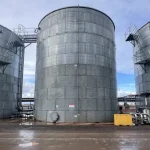
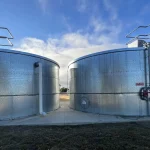
Modular water tanks are widely used in modern infrastructure projects due to their flexibility, scalability, and ability to adapt to diverse site conditions. Unlike single-piece tanks, modular systems are assembled from prefabricated components, allowing them to meet varying capacity, access, and layout requirements.
This article explains how modular water tanks are used across different applications and why their design makes them suitable for a broad range of environments.
Use in Commercial and Institutional Buildings
In commercial and institutional settings, modular water tanks are often used to support potable water supply, process water storage, or emergency reserves. Their modular construction allows tanks to be installed in basements, rooftops, or mechanical rooms where space is limited.
Because components are transported individually, modular tanks can be assembled in locations that are difficult to access with large equipment. This makes them well suited for both new developments and retrofit projects in existing buildings.
Applications in Industrial Facilities
Industrial environments often require reliable water storage for cooling, processing, cleaning, or safety-related functions. Modular water tanks are used in these settings because they can be configured to match precise operational requirements.
Their design supports large storage volumes while maintaining structural stability. Modular systems can also be adapted to withstand demanding environmental conditions, including exposure to moisture, chemicals, or temperature variations.
Use in Fire Protection and Emergency Systems
One of the most common uses of modular water tanks is fire protection storage. These tanks provide a dedicated water reserve that supports fire suppression systems in industrial plants, warehouses, and large facilities.
Modular construction allows fire water tanks to be sized accurately according to regulatory requirements and site constraints. In some cases, tanks can be expanded or modified if fire protection needs change over time.
Role in Infrastructure and Utility Projects
Modular water tanks are frequently used in infrastructure and utility projects where reliable water storage is essential. This includes municipal facilities, pumping stations, and remote installations.
Their adaptability makes them suitable for projects where site conditions vary or where future capacity expansion may be required. Modular systems can be installed above ground or elevated, depending on distribution and pressure requirements.
Use in Temporary and Phased Developments
Because modular water tanks can be assembled, disassembled, and reconfigured, they are often used in temporary or phased developments. Construction sites, remote operations, and infrastructure projects with evolving needs benefit from this flexibility.
As project requirements change, modular tanks can be relocated or resized without replacing the entire system.
Integration into Existing Systems
Another important use of modular water tanks is integration into existing water storage and distribution systems. Modular construction allows tanks to be added alongside existing infrastructure with minimal disruption.
This makes them suitable for system upgrades, capacity increases, or replacement projects where continuity of operations is important.
Factors that Influence how Modular Tanks are Used
The way modular water tanks are used depends on several factors, including:
- Required storage capacity
- Available space and access conditions
- Water quality and regulatory requirements
- Environmental exposure
- Long-term operational planning
Understanding these factors helps engineers and facility managers determine the most effective way to incorporate modular tanks into a project.
This overview provides further insight into modular water storage system configurations.
Final Thoughts
Understanding how modular water tanks are used highlights their role as adaptable and practical storage solutions. Their modular design supports a wide range of applications, from building services and industrial operations to infrastructure and emergency systems.
Rather than being limited to a single use case, modular water tanks provide a flexible framework that can evolve alongside project requirements, making them a key component of modern water storage strategies.