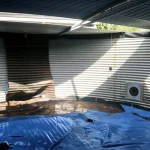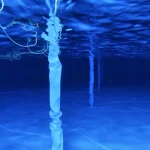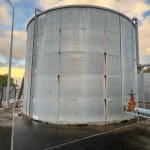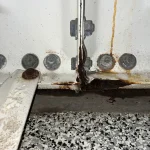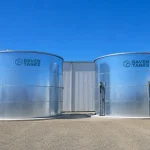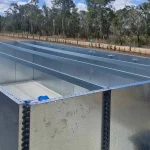
Panel water tanks are used across commercial, industrial, municipal, and building water storage systems. Unlike one-piece tanks, panel tanks consist of individual sections assembled into a complete structure. This design allows tanks to be constructed in different sizes and configurations.
It can also simplify installation where access is limited. However, panel construction creates multiple joints, connections, seals, and structural components. These areas form an important part of any panel tank inspection.
Panel tanks are also manufactured from different materials. Common examples include GRP, galvanised steel, stainless steel, and coated steel. Each material has different deterioration mechanisms and inspection requirements.
Understanding these differences helps explain what inspectors look for during a panel water tank assessment.
What is a Panel Water Tank?
A panel water tank is assembled from individual prefabricated panels. The panels form the walls, base, and sometimes the roof of the tank. Individual sections are normally connected on site.
This modular construction allows tank dimensions to be adapted to available space and required storage capacity. Panel tanks can be particularly useful in plant rooms and other restricted-access locations.
The individual components can be transported separately before assembly.
A typical panel water tank can include:
- Wall panels
- Base panels
- Roof panels
- Bolted joints
- Gaskets and seals
- Fasteners
- Internal or external bracing
- Structural supports
- Inlets and outlets
- Overflow connections
- Drain connections
- Access hatches
- Ladders
- Vents and screens
The exact configuration varies between tank types and manufacturers. These components work together as one storage system.
Inspection should therefore consider more than panel surfaces alone. Learn more about panel water storage tanks and the different materials and configurations available for commercial and industrial applications.
Main Types of Panel Water Tanks
Panel water tanks can be classified according to their construction material. The material influences structural behaviour, deterioration mechanisms, and inspection priorities.
Four common categories are GRP, galvanised steel, stainless steel, and coated steel panel tanks.
GRP Panel Water Tanks
GRP stands for glass reinforced plastic. It combines glass fibres with a polymer resin to create a reinforced composite material. GRP panel tanks are usually assembled from moulded sections.
The panels are connected using fasteners and sealing systems. GRP does not rust like conventional carbon steel.
However, composite materials can experience other forms of deterioration or damage.
Typical inspection areas include:
- Panel cracks
- Surface damage
- Delamination
- Panel deformation
- Joint leakage
- Gasket deterioration
- Damaged panel edges
- Fastener condition
- Bracing condition
- Internal deposits
Environmental exposure can also affect external surfaces. UV exposure may be relevant for tanks installed outdoors. Inspection should also include metallic components within the GRP tank system.
Fasteners, supports, ladders, fittings, and bracing can have different corrosion characteristics from the GRP panels. Learn more about GRP-specific inspection methods, components, and defects in our GRP water tank inspection guide.
Galvanised Steel Panel Tanks
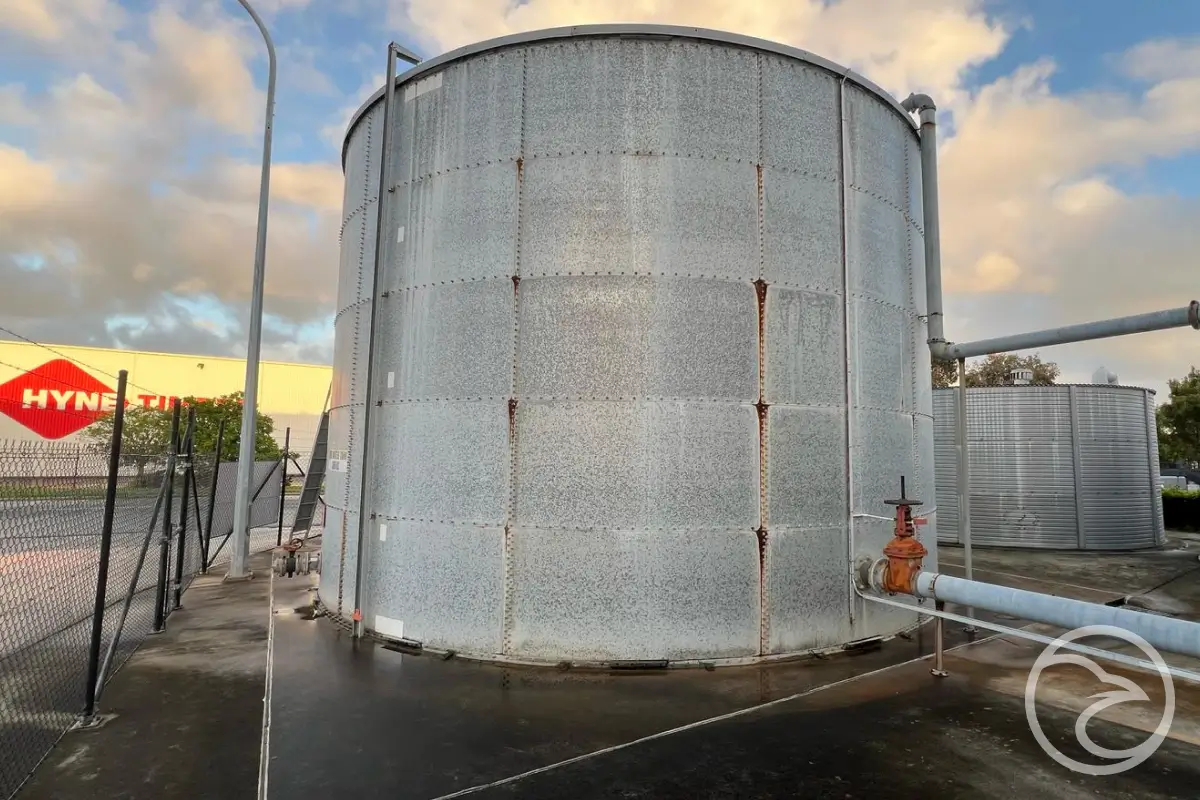
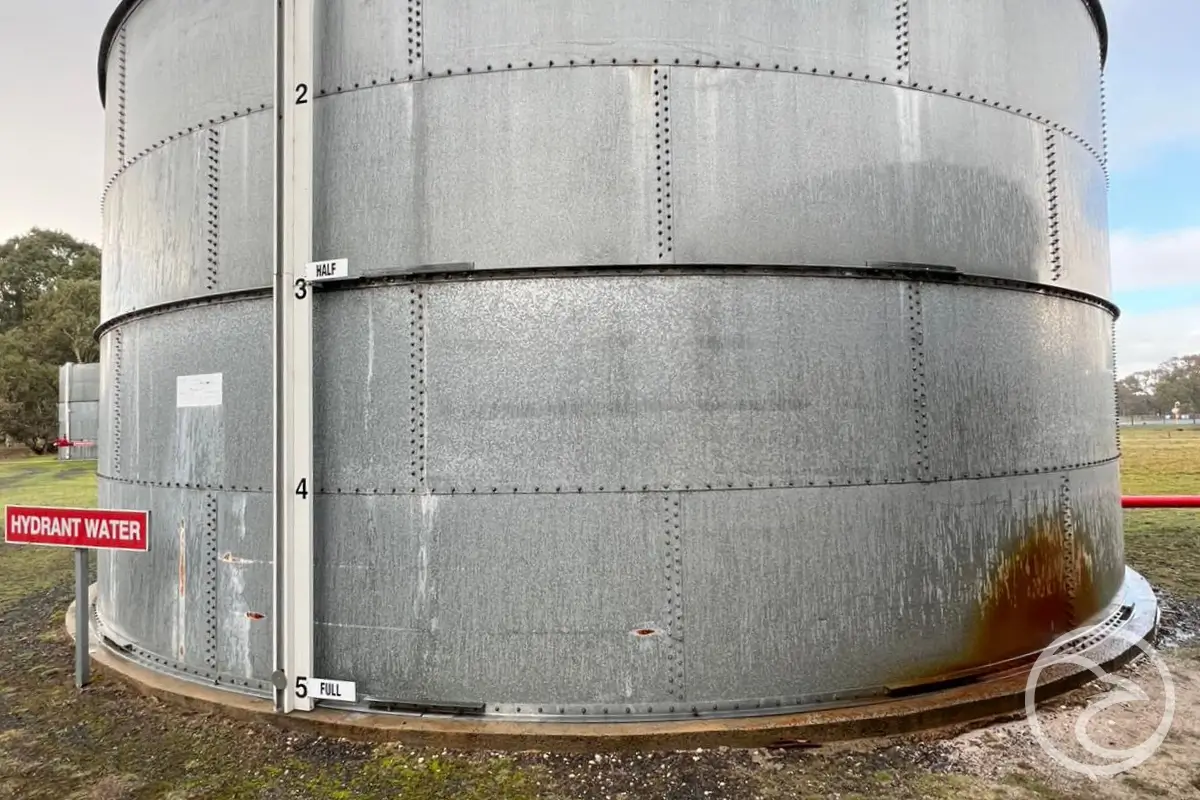
Galvanised steel tanks use steel panels protected by a zinc coating. The zinc layer helps protect the underlying steel from corrosion. Its condition is therefore an important inspection consideration.
Galvanised surfaces can deteriorate because of environmental exposure, water chemistry, or mechanical damage. Once protection becomes compromised, localised corrosion may develop.
Typical inspection areas include:
- Zinc coating condition
- Surface corrosion
- Rust staining
- Pitting
- Panel deformation
- Bolted connections
- Panel edges
- Fasteners
- Bracing
- Joints and seals
- Areas around fittings
The severity of corrosion depends on its location and extent. Surface staining alone does not necessarily establish significant material loss.
Inspection may therefore need to distinguish cosmetic changes from active deterioration.
Stainless Steel Panel Tanks
Stainless steel contains alloying elements that provide increased corrosion resistance. Different stainless steel grades can be used for water storage applications. However, stainless steel should not be considered completely immune to corrosion.
Local environmental conditions can affect its performance. Chlorides, water chemistry, temperature, fabrication quality, and surface condition may influence deterioration.
Inspection areas can include:
- Panel surfaces
- Localised corrosion
- Pitting
- Discolouration
- Bolted connections
- Welded areas where present
- Fasteners
- Gaskets
- Panel deformation
- Internal supports
- Pipe connections
Inspection should pay particular attention to localised changes rather than assuming all stainless surfaces behave identically.
Coated Steel Panel Tanks
Coated steel panel tanks use a protective coating over a steel substrate. The coating creates a barrier between the metal and its environment. Several coating systems can be used depending on tank design and application.
The condition of this barrier is central to inspection.
Common problems can include:
- Scratches
- Coating breakdown
- Blistering
- Peeling
- Chipping
- Exposed steel
- Local corrosion
- Damage around bolts
- Edge deterioration
Small areas of coating damage can expose the underlying steel. These areas can then become more susceptible to corrosion.
Inspection should therefore consider both coating condition and the steel beneath damaged areas.
Glass-Fused-to-Steel Panel Tanks
Glass-fused-to-steel tanks use steel panels with a glass coating bonded to their surfaces. The system combines the structural properties of steel with a protective glass layer. The protective surface can provide strong resistance to many storage environments.
However, local damage can still require attention.
Inspection areas can include:
- Chips
- Surface damage
- Exposed steel
- Localised corrosion
- Panel edges
- Bolted connections
- Gaskets
- Seals
- Leakage
- Structural deformation
Inspection should consider whether visible damage has affected only the surface or exposed the steel substrate. Our guide to types of modular water storage systems explains the main designs, materials, and applications used for water storage.
Why do Panel Water Tanks Need Inspection?
All water storage tanks experience operating loads and environmental exposure. Panel tanks also contain numerous connections between individual components. Every panel joint represents part of the complete structural and sealing system.
Bolts, gaskets, braces, and supports also contribute to tank performance. Over time, these components can experience ageing or deterioration.
Possible contributing factors include:
- Water pressure
- Material ageing
- Water chemistry
- Temperature changes
- UV exposure
- Mechanical damage
- Foundation movement
- Seal deterioration
- Corrosion
- Previous repairs
- Installation problems
Some problems are visible from outside the tank. Others can remain hidden on internal surfaces or behind stored water. Regular inspection provides information about the condition of these components.
It can also identify changes before they develop into larger problems.
What does a Panel Tank Inspection Include?
The exact inspection process depends on tank material, design, application, and condition. However, several areas are relevant across most panel tank systems.
External Panel Inspection
External inspection provides information without entering the tank. The inspector can examine accessible panel surfaces and surrounding components.
Typical checks include:
- Cracks
- Corrosion
- Coating damage
- Panel deformation
- Leakage
- Staining
- Mechanical damage
- Previous repairs
Different materials require different interpretations. A crack may be particularly relevant to GRP. Rust staining may be more relevant to galvanised or coated steel.
External inspection can also identify water around the tank base. However, visible moisture does not always identify the source.
Discover how ROV technology supports water tank inspection without draining and enables visual examination of submerged surfaces.
Panel Joint Inspection
Joints are particularly important in sectional water tanks. They create connections between individual panels while maintaining watertightness.
Typical inspection points include:
- Gasket condition
- Sealant condition
- Bolt condition
- Panel alignment
- Visible movement
- Leakage
- Corrosion around connections
Joint deterioration can develop even when panel material remains in good condition. For example, a GRP panel may remain structurally sound while its gasket deteriorates.
Steel panel tanks can experience similar sealing problems. This makes joint condition relevant regardless of panel material.
Internal Tank Inspection
Internal inspection can reveal conditions that are not visible externally. The exact approach depends on tank operation and inspection method.
Internal checks may include:
- Panel surfaces
- Joint condition
- Corrosion
- Delamination
- Coating condition
- Sediment
- Internal seals
- Bracing
- Fittings
- Previous repairs
- Signs of contamination
Stored water can conceal sections of the tank during some inspection methods. Sediment can also cover internal surfaces.
The limitations of the inspection method should therefore be considered when interpreting findings.
Structural Bracing Inspection
Large sectional tanks may use internal or external bracing. These components help manage loads created by stored water. Bracing can include tie rods, supports, frames, and associated connections.
Inspection may check for:
- Corrosion
- Mechanical damage
- Loose connections
- Missing components
- Displacement
- Deformation
- Fastener deterioration
Problems with bracing can affect load distribution. This can place additional stress on panels and connections.
Bracing should therefore be considered part of the tank structure rather than an isolated component.
Base and Foundation Inspection
The foundation supports the entire tank. Changes underneath the structure can affect panel alignment and load distribution.
Inspection may consider:
- Settlement
- Uneven support
- Foundation cracking
- Moisture
- Movement
- Base corrosion
- Panel deformation
- Changes around supports
Foundation problems can sometimes appear as tank problems. For example, movement may contribute to joint leakage or panel deformation.
Repeated repairs to a leaking joint may not resolve an underlying foundation issue.
Roof and Access Components
The tank roof and access systems also require attention. Roof components can be exposed to weather, moisture, and mechanical loads.
Inspection areas may include:
- Roof panels
- Access hatches
- Ladders
- Vents
- Screens
- Covers
- Seals
- Fasteners
Damaged access components can create water quality concerns. Missing or damaged screens may allow insects or debris to enter the tank.
Poorly sealed hatches can also create potential contamination pathways.
Pipework and Connections
Water tanks contain several connections to surrounding systems.
These can include:
- Inlets
- Outlets
- Overflows
- Drains
- Level controls
- Pipe penetrations
Connections should be checked for leakage, movement, and deterioration. Unsupported pipework can potentially transfer additional loads to the tank.
Movement can also affect seals around penetrations. Inspection should therefore consider both the fitting and connected pipework.
How Inspection Differs by Panel Tank Material
The general inspection process can be similar across panel tanks. However, material-specific deterioration changes what inspectors look for.
| Inspection Area | GRP | Galvanised Steel | Stainless Steel | Coated Steel |
|---|---|---|---|---|
| Cracking | Important | Less typical | Less typical | Usually coating-related |
| Delamination | Relevant | Not applicable | Not applicable | Not applicable |
| Corrosion | Mainly metal components | Major consideration | Possible | Relevant if protection fails |
| Coating condition | Depends on system | Zinc layer | Usually secondary | Major consideration |
| Joint leakage | Important | Important | Important | Important |
| Panel deformation | Important | Important | Important | Important |
| Seal condition | Important | Important | Important | Important |
| Fastener condition | Important | Important | Important | Important |
| Bracing | Important | Important | Important | Important |
| Internal deposits | Important | Important | Important | Important |
This comparison shows why panel tank inspection cannot follow one identical checklist. The tank material changes the likely deterioration mechanisms.
However, many structural and sealing components remain relevant across all tank types.
Common Problems Found During Panel Tank Inspections
Panel tanks can develop several common problems during service. Some are directly related to panel material.
Others can occur across almost every sectional tank system.
Panel Damage
Panel damage can take different forms. GRP panels may develop cracks, delamination, or impact damage. Steel panels may develop dents, corrosion, or coating deterioration.
The significance depends on the location and extent of the damage. Panel deformation may also indicate movement elsewhere in the structure.
Joint Leakage
Joint leakage can occur across different panel tank materials.
Possible causes include:
- Gasket deterioration
- Loose connections
- Panel movement
- Incorrect assembly
- Ageing seals
- Foundation movement
The leak source should be identified before determining appropriate corrective action. Visible water does not always indicate panel failure.
Corrosion
Corrosion primarily affects metallic components and steel tank systems. Galvanised steel can experience deterioration of its protective zinc layer.
Coated steel can corrode where the protective barrier becomes damaged. Stainless steel can experience localised corrosion under certain conditions.
GRP tanks can also contain metallic components that may corrode.
Seal and Gasket Deterioration
Sealing materials can change as they age. They may harden, crack, compress, or lose flexibility.
These changes can reduce watertightness around panel connections. Seal deterioration can occur even when the surrounding panels remain in good condition.
Loose or Damaged Fasteners
Fasteners help maintain structural connections between tank components. They can be affected by corrosion, vibration, movement, or previous maintenance.
Loose fasteners may allow additional movement. This can place greater stress on joints and sealing systems.
Bracing Problems
Bracing defects can include corrosion, loose connections, displacement, or mechanical damage. These problems can influence how structural loads move through the tank.
Internal bracing may not be visible during an external inspection.
Sediment and Internal Deposits
Stored water can carry particles into the tank. These particles may settle over time.
Sediment can obscure internal surfaces during inspection. It can also create conditions that support microbial growth.
Accumulation is not specific to any single panel material.
Damaged Access Components
Access hatches, vents, screens, and ladders can deteriorate independently from the main tank. These components still form an important part of tank operation.
Damaged screens or covers can create possible contamination pathways.
Internal vs External Panel Tank Inspection
External and internal inspections provide different types of information. Neither approach should automatically be considered equivalent to the other.
What can an External Inspection Identify?
External inspection may identify:
- Visible leaks
- Panel deformation
- External corrosion
- Surface damage
- Coating deterioration
- Foundation movement
- Damaged fittings
- Connection problems
It can also document changes around the surrounding structure. However, external assessment cannot always establish internal condition.
What can an Internal Inspection Identify?
Internal inspection may reveal:
- Internal corrosion
- GRP surface damage
- Delamination
- Coating breakdown
- Sediment
- Bracing deterioration
- Internal seal condition
- Damaged fittings
- Signs of contamination
Some defects may exist only on internal surfaces. This is particularly relevant for corrosion, coatings, and water-contact components.
Can Panel Tanks be Inspected Without Draining?
Some inspections can be completed without fully draining a tank. The appropriate method depends on the information required.
Traditional Drained Inspection
A drained inspection allows direct access to internal surfaces. It can provide close assessment of panels, joints, bracing, and other components. Cleaning may also be completed while the tank is out of service.
However, draining can create operational requirements. Alternative water storage may be necessary for some facilities.
Safety requirements also apply to internal tank access.
Remote Inspection Methods
Remote visual technologies can provide information without traditional internal access. Depending on the application, these can include underwater cameras or remotely operated equipment.
Recorded footage can document internal surfaces and components. Remote methods can be useful where avoiding tank entry offers operational advantages. However, they do not automatically replace every form of direct assessment.
Some defects may require closer physical examination or additional testing. The inspection method should match the purpose of the assessment.
How Tank Material Changes the Inspection Approach
The same inspection method should not be applied identically to every panel tank. Different materials have different failure and deterioration mechanisms.
For a GRP panel tank, inspection may ask:
- Are panels cracked?
- Is delamination present?
- Are surfaces damaged?
- Have panels deformed?
For a galvanised steel tank, inspection may focus on:
- Is the zinc protection deteriorating?
- Is corrosion developing?
- Is metal loss visible?
- Are panel edges affected?
For a coated steel tank, important questions include:
- Is the coating intact?
- Are scratches exposing steel?
- Is blistering present?
- Has corrosion developed beneath damaged areas?
For stainless steel, inspection can consider:
- Is localised corrosion present?
- Are there signs of pitting?
- Are connections in good condition?
- Are environmental conditions affecting the surface?
Some questions remain relevant for every material. Joints, seals, fasteners, supports, bracing, and foundations should still be considered.
Warning Signs that a Panel Tank may need Inspection
Panel tank problems can develop gradually. Recognising visible changes can help identify when further assessment may be appropriate.
Warning signs can include:
- Visible leakage
- Water around the tank base
- Rust staining
- Panel cracks
- Bulging or deformation
- Coating damage
- Loose fasteners
- Damaged seals
- Corroded bracing
- Foundation movement
- Damaged access hatches
- Missing vent screens
- Unusual internal deposits
- Changes around pipe connections
- Changes in stored water condition
These signs do not necessarily identify the underlying cause. For example, leakage can result from seals, fittings, joints, or connected pipework.
Further assessment may be required to determine the source.
How Often Should Panel Water Tanks be Inspected?
There is no single inspection frequency suitable for every panel water tank. Requirements depend on the tank’s purpose and operating environment.
Important factors include:
- Tank material
- Stored water type
- Tank age
- Environmental exposure
- Applicable standards
- Regulatory requirements
- Manufacturer recommendations
- Previous defects
- Water quality requirements
- Maintenance history
A tank with known deterioration may require different monitoring from a newer tank without recorded defects. Potable water and fire water systems can also have specific inspection requirements.
The applicable requirements should therefore be determined for each installation.
What Happens After a Panel Tank Inspection?
Inspection findings can vary significantly. Some tanks may show no significant deterioration. Others may have local defects requiring monitoring or maintenance.
Possible outcomes include:
- No immediate action
- Continued condition monitoring
- Cleaning
- Seal replacement
- Fastener maintenance
- Local panel repairs
- Coating repairs
- Corrosion treatment
- Component replacement
- Further structural assessment
An inspection report can document the condition found at the time of assessment. It may include photographs, defect locations, observations, and recommended follow-up actions.
Historical reports can also help identify changes between inspections.
Panel Tank Inspection Checklist
A basic checklist can help organise the main inspection areas. However, the exact requirements should reflect the tank material and application.
Panels
Check:
- Surface condition
- Cracks
- Corrosion
- Coating condition
- Delamination
- Deformation
- Previous repairs
Joints
Check:
- Gaskets
- Sealants
- Fasteners
- Alignment
- Leakage
- Movement
Structural Components
Check:
- Internal bracing
- External bracing
- Supports
- Connections
- Foundation
- Structural movement
Internal Condition
Check:
- Sediment
- Corrosion
- GRP damage
- Coating deterioration
- Contamination
- Internal fittings
Access and Fittings
Check:
- Access hatches
- Ladders
- Vents
- Screens
- Inlets
- Outlets
- Overflows
- Drains
The checklist provides a general framework rather than a universal inspection standard.
Summary
Panel tank inspection is not an identical process for every water storage system. GRP, galvanised steel, stainless steel, and coated steel have different material characteristics. GRP inspections can focus on cracking, delamination, deformation, and joint condition.
Galvanised steel requires particular attention to corrosion and protective zinc surfaces. Coated steel inspections consider both coating condition and the underlying steel.
Stainless steel can require checks for localised corrosion and pitting. Despite these differences, all panel tanks share several important inspection areas.
Panels, joints, seals, fasteners, bracing, supports, fittings, and foundations can all affect tank condition. Understanding both the material and the complete tank system provides a more useful approach to panel water tank inspection.