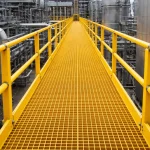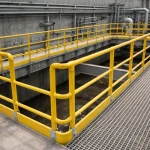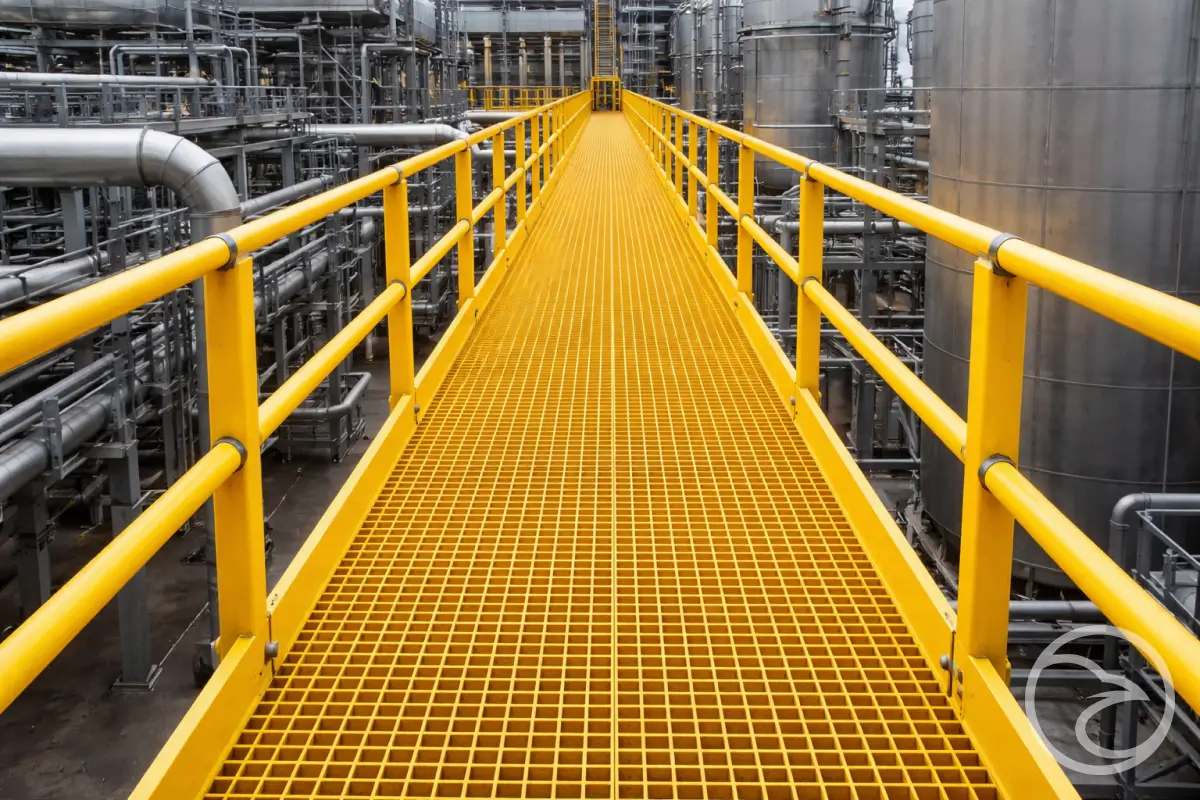
Industrial walkways are essential for safe access, maintenance, and operations across a wide range of industries. Choosing the right material is critical, as it directly impacts safety, durability, and long-term costs.
Two of the most common options are FRP (Fiber Reinforced Plastic) and steel walkways. Each material has its own strengths and limitations. Understanding the differences between FRP walkways vs steel walkways can help you make the right choice for your specific application.
What are FRP Walkways?
FRP walkways are made from fiber reinforced plastic, a composite material that combines resin with glass fibers. This creates a structure that is lightweight, strong, and resistant to environmental factors.
FRP industrial walkways are commonly used in:
- Chemical plants
- Water treatment facilities
- Coastal environments
- Industrial platforms
They are particularly valued for their corrosion resistance and low maintenance requirements.
What are Steel Walkways?
Steel walkways are traditional structures made from carbon steel, stainless steel, or galvanized steel. They have been widely used for decades due to their strength and load-bearing capacity.
Steel walkways are commonly found in:
- Heavy industrial facilities
- Construction sites
- Infrastructure projects
They are known for their rigidity and ability to handle heavy loads.
Key Differences Between FRP and Steel Walkways
Corrosion Resistance
One of the biggest advantages of FRP is its resistance to corrosion. Unlike steel, FRP does not rust when exposed to moisture, chemicals, or salt.
- FRP: Excellent corrosion resistance
- Steel: Requires coatings or galvanization to prevent rust
In harsh environments, FRP walkways offer a clear advantage.
Weight and Installation
FRP walkways are significantly lighter than steel, which simplifies transportation and installation.
- FRP: Lightweight, easy to handle
- Steel: Heavy, requires more equipment
This makes FRP a preferred option for projects with limited access or tight timelines.
Strength and Load Capacity
Steel is known for its high load-bearing capacity, making it suitable for heavy-duty applications.
- FRP: Strong but lighter-duty in comparison
- Steel: Higher structural strength
For extremely heavy loads, steel may still be the better option.
Safety and Slip Resistance
Safety is a key consideration in walkway design. FRP walkways are often manufactured with anti-slip surfaces.
- FRP: Built-in slip resistance
- Steel: May require additional coatings or grating
FRP walkways are often safer in wet or hazardous environments.
Maintenance Requirements
FRP requires minimal maintenance due to its resistance to corrosion and environmental damage.
- FRP: Low maintenance
- Steel: Requires regular inspection, painting, or treatment
Over time, maintenance costs for steel can add up significantly.
Lifespan and Durability
Both materials are durable, but their lifespan depends on environmental conditions.
- FRP: Long lifespan in harsh environments
- Steel: Durable but susceptible to corrosion over time
FRP often performs better in chemically aggressive or coastal areas.
Cost Considerations
Initial costs may vary depending on the project, but long-term costs are equally important.
- FRP: Higher upfront cost in some cases, lower maintenance costs
- Steel: Lower initial cost, higher maintenance over time
FRP can be more cost-effective in the long run.
Electrical and Thermal Conductivity
FRP is non-conductive, which adds an extra layer of safety in certain environments.
- FRP: Non-conductive and thermally stable
- Steel: Conductive
This makes FRP suitable for electrical or high-risk environments.
When to Choose FRP Walkways
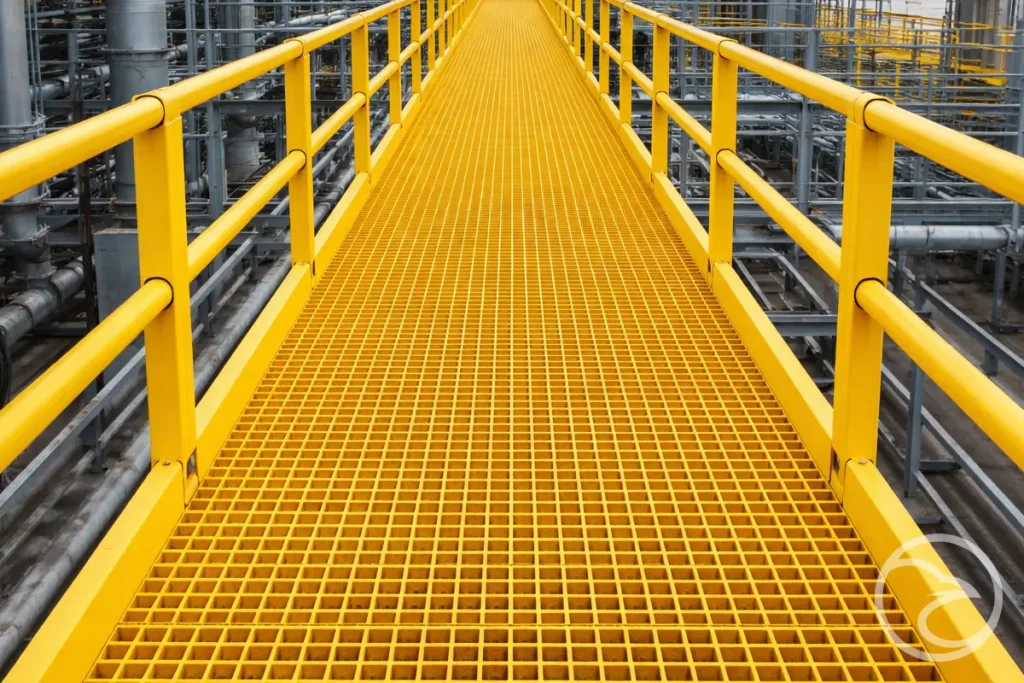
FRP walkways are ideal when:
- Corrosion resistance is critical
- Low maintenance is required
- Lightweight installation is beneficial
- Safety and slip resistance are priorities
They are especially effective in chemical, marine, and water-related industries.
When to Choose Steel Walkways
Steel walkways are better suited for:
- Heavy load-bearing applications
- High-impact environments
- Projects with strict structural requirements
They remain a reliable choice in traditional industrial settings.
Which Option is Better?
The decision between FRP walkways vs steel walkways depends on your specific needs. If your project involves harsh environments, corrosion exposure, or safety concerns, FRP is often the better choice.
However, for heavy-duty structural applications where maximum strength is required, steel may still be preferable.
Final Thoughts
Both FRP and steel walkways have their advantages, but the right choice depends on your operational requirements, environment, and long-term goals. FRP industrial walkways offer modern, low-maintenance solutions with excellent resistance to corrosion and environmental damage.
By carefully evaluating your project needs, you can select the material that delivers the best balance of safety, performance, and cost.